Git for AI Coding Agents Without the CI Bill
Git for AI coding agents: how agent fleets multiply clone, ref, and CI load, and the shallow, partial, and sparse checkout patterns that cap it.
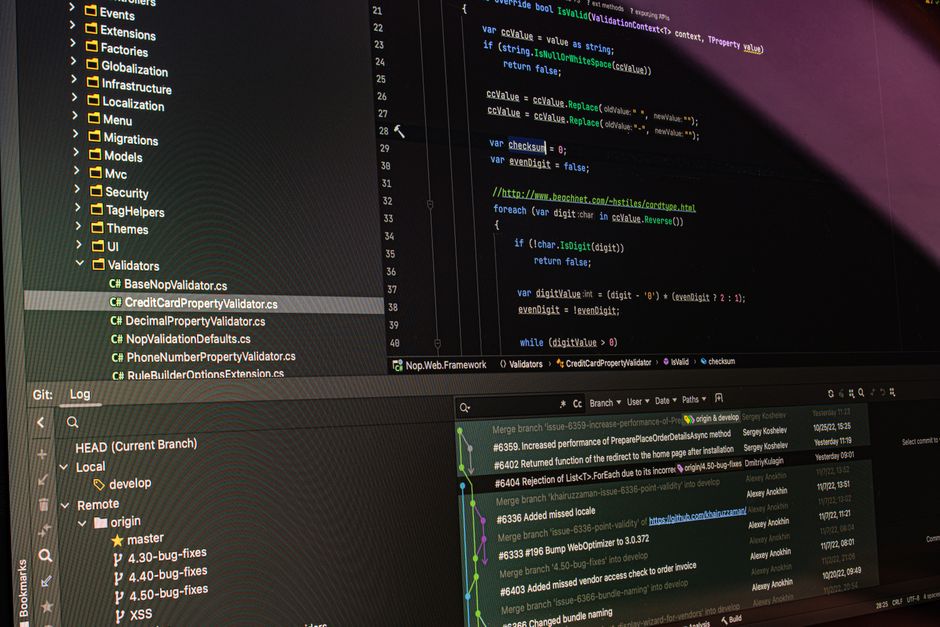
The repository was fine. Forty engineers, one multi-gigabyte clone, a CI line item nobody argued about. Then the team wired a few coding agents into the backlog, and a month later the same repository was serving dozens of machine sandboxes a day, each one starting from a fresh clone. The human workload did not change. The repository's job did.
Stay in the loop.
Get the latest posts and exclusive content delivered to your inbox.
Join 10 readers. No spam. Unsubscribe in one click, anytime.
That is the real question when you run Git for AI coding agents at fleet scale. Once attempted fixes, rather than developers, become the unit of demand, an ordinary repository turns into a read-amplification machine: every task pays the clone cost again, most attempts can burn a full CI run, and every agent hour mints branches nobody plans to delete. The highest-leverage response is repository architecture itself, not bigger runners or tighter agent budgets. Clone filtering, sparse checkout, deliberate context packaging, and ref discipline cap the three numbers that matter: bytes per run, refs per agent, and CI minutes per attempted fix.
This is not hypothetical. GitHub is publicly rebuilding its Git infrastructure for agent-scale development, describing repositories where humans and agents now work concurrently at millions of commits a day. When the host re-architects for machine clients, treat agents as a first-class consumer of your repository, not an edge case.
From developer workspace to read service
Repository design has always optimized for human reviewers: readable diffs, reviewable pull requests, a branch list a person can scan. Machine consumers have a different access pattern. They clone full history they mostly never read, enumerate the tree to orient themselves, push small speculative diffs, and retry when verification fails. None of that shows up in code review; all of it shows up in fetch traffic, ref counts, and the CI queue.
Three budgets describe the new load, and it is worth naming them before tuning anything:
- Bytes per run, what one sandboxed task costs to materialize.
- Refs per agent, the branch and fork residue each agent leaves behind.
- CI minutes per attempted fix, what verification costs before anyone approves anything.
While agents are a minority consumer, these budgets can drift quietly. Once agents are the majority, running Git for AI coding agents becomes an API design exercise, and those three budgets are its service-level objectives.
What Git for AI coding agents actually costs
Four multipliers do the damage, and separating them matters because the fixes differ.
| Multiplier | What scales | What you notice first |
|---|---|---|
| Clone per sandbox | Read traffic with attempted tasks, not headcount | Slower clones, busier Git servers |
| Branch churn | New refs per task, merged or abandoned | Branch lists in the hundreds |
| Fork sprawl | Whole-repo copies per agent or fleet | Stale forks, painful back-sync |
| CI per attempt | Full pipeline runs per speculative PR | Queue depth and a climbing bill |
The clone multiplier is the quiet one. Sandboxed runs usually start from a fresh clone or a full fetch, because isolation is the point of the sandbox. Repository read traffic therefore scales with the number of attempted tasks rather than the number of humans, so a fleet of thirty agents can out-read a team of forty engineers on a busy Tuesday.
The arithmetic on one mid-size repo
Run the numbers on an illustrative setup: a 3 GB full clone, forty humans, eighty sandboxed agent runs per day, and a 20-minute CI pipeline. Human activity stays constant throughout, and the monthly figures below assume about 22 working days a month; on a 30-day calendar month the same arithmetic produces roughly 7.2 TB of transfer and 2,400 branches.
| Line | Assumption | Daily result |
|---|---|---|
| Clone transfer | 80 runs × 3 GB | 240 GB per day, roughly 5 TB a month |
| New refs | 80 tasks × 1 branch | 80 branches per day, nearly 1,800 a month without deletes |
| CI load | 80 attempts × 20 min | About 27 hours of pipeline a day |
Some transfer gets absorbed by server-side caching and pack reuse, and real repositories vary. The multiplier is still the point: with zero additional human activity, the repository now materializes eighty full copies a day and runs a full day of CI that mostly verifies attempts rather than approvals. If only a quarter of those attempts merge, most of those 27 hours bought nothing that shipped.
Clone less with shallow and partial clones

The fastest way to reduce clone size for AI coding agents is to stop transferring history and file contents the agent will never read. The trimming happens through two separate mechanisms that get conflated. Partial clone, the object-filtering design documented in the partial clone documentation, has two practical variants: blobless and treeless. Shallow clone is a different mechanism entirely; --depth truncates history at fetch time rather than filtering objects. In practice that gives you three options:
| Variant | Command | What arrives | Trade-off |
|---|---|---|---|
| Shallow | --depth=1 | Latest snapshot only | No history; blame, log, and bisect degrade |
| Blobless | --filter=blob:none | Commits and trees, no file contents | Blobs fetched on demand at checkout |
| Treeless | --filter=tree:0 | Commits only | Trees and blobs on demand; needs network for most walks |
On history-heavy repositories these variants can cut initial transfer by roughly an order of magnitude, at the cost of on-demand fetches and less locally available history. GitHub's own clone walkthrough, which covers both mechanisms including the --depth shallow snapshot, recommends blobless clones for CI and developer workflows.
Choosing between shallow and blobless
The shallow clone vs partial clone choice for CI comes down to whether the job needs history. A build wants the snapshot, so depth 1 wins. An agent that might inspect history wants the full commit graph, so blobless wins. Treeless fits ephemeral CI runners with reliable network access. Whatever you pick, the sandbox must be able to reach the origin for on-demand fetches, so keep that path fast.
# Blobless: full history shape, contents fetched only when read
git clone --filter=blob:none https://github.com/org/monorepo.git

# Shallow: snapshot only, cheapest when history is irrelevant
git clone --depth=1 https://github.com/org/monorepo.git
Check out less with sparse checkout

Sparse checkout's real job for agent fleets is attention engineering. An agent's cost tracks the surface it can see, because agents orient by enumerating whatever is checked out. A payments agent confined to two directories of a five-hundred-directory monorepo greps less, reads less, and in a blobless sandbox triggers fewer on-demand blob fetches: every file it cannot see is a blob it never requests. Disk space is the least of it.
The clone patterns above cap one axis and sparse checkout caps the other, and either half alone leaves the job unfinished:
| Axis | Pattern | What it caps |
|---|---|---|
| History bytes | Partial clone, --filter=blob:none | Commit and tree transfer; blobs on demand |
| Working-tree bytes | Sparse checkout | Extraction time, disk, and the readable surface |
A blobless clone of everything still materializes the whole tree at checkout. A sparse checkout over a full clone still ships every historical object. That complementarity is why monorepo CI performance gains come from the pairing rather than either half alone, and after a filtered clone the second half is one command:
git sparse-checkout set services/payments libs/shared
Monorepos turn this from an optimization into a design decision. The deciding question is whether your version control can serve selective access at scale, and Google's monorepo rationale is the strongest published argument that it can: a repository holding billions of lines stays workable because clients operate on a workspace mapped to the subset they need. Google built custom infrastructure to get that; Git reaches a similar place natively with clone filters plus sparse checkout, which is what makes "keep it in one repository" a defensible answer at monorepo scale.
Use cone mode. The official sparse-checkout documentation describes cone mode's restrictions on pattern shapes, and the restrictions are the feature: they keep pattern matching fast and predictable enough to run per sandbox.
Package context instead of shipping the whole repo
Clone filters move bytes. Context packaging moves attention. Before an agent writes code it reads the repository to orient itself, and an agent set loose in a big tree will enumerate a lot of it, which in a blobless sandbox means fetching blobs you just optimized away.
Context packaging for coding agents means the repository ships its own orientation kit:
- A repository map, a generated index of top-level directories, their owners, and their build targets.
- Directory READMEs and an architecture manifest maintained like code, not like documentation.
- Agent instruction files that persist project conventions, for example the repository memory files Claude Code reads for project context.
Treat these as reviewed artifacts rather than prompt tricks. A good map changes what the agent greps and what it fetches, and the cheapest blob to transfer is the one the agent never requests.
Ref hygiene and the fork question for fleets
Branch cleanup settings
Every task tends to spawn a short-lived branch or fork, and without cleanup rules the residue grows steadily. Branch cleanup for AI-generated pull requests comes down to three settings:
- A naming convention. Prefix agent branches,
agent/1234-fix-timeout, so they are identifiable and filterable. - Delete on merge. Turn on automatic branch deletion so merged heads disappear instead of accumulating.
- A time to live. A scheduled job that closes untouched agent branches after a week or so. Abandoned attempts are not history; they are ref noise every future fetch negotiates around.
Fork vs branch for agent fleets
Then the fleet decision, fork vs branch strategy for AI agents. Short-lived branches suit trusted internal fleets: cheap, visible, one repository to govern. Forks suit untrusted or heavily parallel fleets, since a fork is its own permission and rate-limit domain. The failure mode is treating forks like branches: forks that never sync, never get deleted, and quietly become read multipliers of their own. If you fork per agent, give every fork the same TTL discipline as a branch.
Break the link between attempts and CI minutes
If you have been wondering why AI agents increase CI minutes, watch the coupling: verification cost scales with attempted fixes rather than approvals. An agent that opens a PR early and then pushes four fix commits can trigger the full pipeline five times before a human looks once. Three patterns break the link.
Path filters run expensive workflows only when relevant paths change:
on:
  push:
    branches: [main]
    paths:
      - "services/payments/**"
Batching makes agents squash or amend before pushing, so five internal fix steps become one CI trigger.
Merge queues run fast checks on the branch and the full matrix once per merge group, moving expensive verification to approval time rather than attempt time.
Together these shift CI cost optimization from the attempt axis to the approval axis, which is the only axis that ships software.
Decision table and this week's checklist
| Symptom | Pattern | First move |
|---|---|---|
| Slow sandbox spin-up, clone timeouts | Shallow or blobless clone | Switch bootstrap to --filter=blob:none |
| Agents wandering a huge monorepo | Sparse checkout plus partial clone | git sparse-checkout set services/payments |
| Agents reading too much, missing structure | Context packaging | Ship a repository map and instruction file |
| Hundreds of branches, stale forks | Ref hygiene with TTL | Enable delete-on-merge, add a cleanup job |
| CI minutes climbing with agent PRs | Path filters and merge queue | Add paths: to costly workflows |
Ship the first three changes inside a week:
- Clone filtering, days 1 and 2. Move CI and agent bootstrap to
--filter=blob:none, or--depth=1where history is irrelevant. Measure bytes per run before and after. - Branch TTL, day 3. Delete-on-merge on, naming convention documented, scheduled cleanup for stale agent branches.
- CI path filters, days 4 and 5. Add
paths:to the most expensive workflows, and evaluate a merge queue for the full matrix.
The goal is not to eliminate agent-driven load, because agents earn their keep by attempting more. The goal is to cap it: a byte budget per run, a ref budget per agent, a CI budget per attempted fix. Recompute your multiplier after the first week. Git for AI coding agents is a budgeting problem, not a hardware problem, and the forty humans on the repo should not notice any of it. That is the point.
Stay in the loop.
Get the latest posts and exclusive content delivered to your inbox.
Join 10 readers. No spam. Unsubscribe in one click, anytime.
About the author
Tyler Brooks
Tools Analyst
Tyler has tested developer tooling for a decade, first as a platform engineer and now as an independent analyst. He reviews models, frameworks, and APIs the way he would want them reviewed before relying on them for real work.
Related Posts

AI Agent Monitoring Beyond the Dashboard
AI agent monitoring fails when dashboards track requests, not resolutions. This taxonomy maps silent failure modes to the signals that catch them.

AI Agent Cost Per Resolution Decides If It Ships
AI agent cost per resolution, not eval accuracy, decides if your agent ships or dies. Token pricing hides the unit economics of retries and failures.

Agentic Reinforcement Learning in the Harness You Ship
Agentic reinforcement learning belongs in the harness you ship, not a training clone. Learn the five failure modes and when to skip RL entirely.