
Custom AI Inference Chips Are Eating the GPU Market
Discover why frontier AI labs are shifting to custom AI inference chips to solve memory bandwidth bottlenecks, reduce latency, and challenge GPU dominance.
Practical AI guides, honest tool reviews, engineering deep dives, real-world use cases, and sharp analysis that cuts through the hype.
Discover why frontier AI labs are shifting to custom AI inference chips to solve memory bandwidth bottlenecks, reduce latency, and challenge GPU dominance.

AI reasoning transparency is failing. Learn why models like Claude summarize their chain of thought, why raw logic is hidden, and how to evaluate black box AI agents.

Discover how autonomous AI agents leak sensitive enterprise data through reasoning traces. Learn practical architectures and sanitization frameworks to prevent exposure.

The open weights vs frontier models gap has closed to 4.4 months at roughly 3x the cost. Here is the math that decides which workloads justify the premium.

Async GRPO training with LoRA swaps NCCL for a bucket and proxy, turning RL fine-tuning from reserved-cluster spend into elastic spot-GPU economics.

AI agent monitoring fails when dashboards track requests, not resolutions. This taxonomy maps silent failure modes to the signals that catch them.
Devin GPT-6 Astra self-testing shifts code review from reading diffs to auditing evidence. Here is the pattern, its failure modes, and audit criteria.
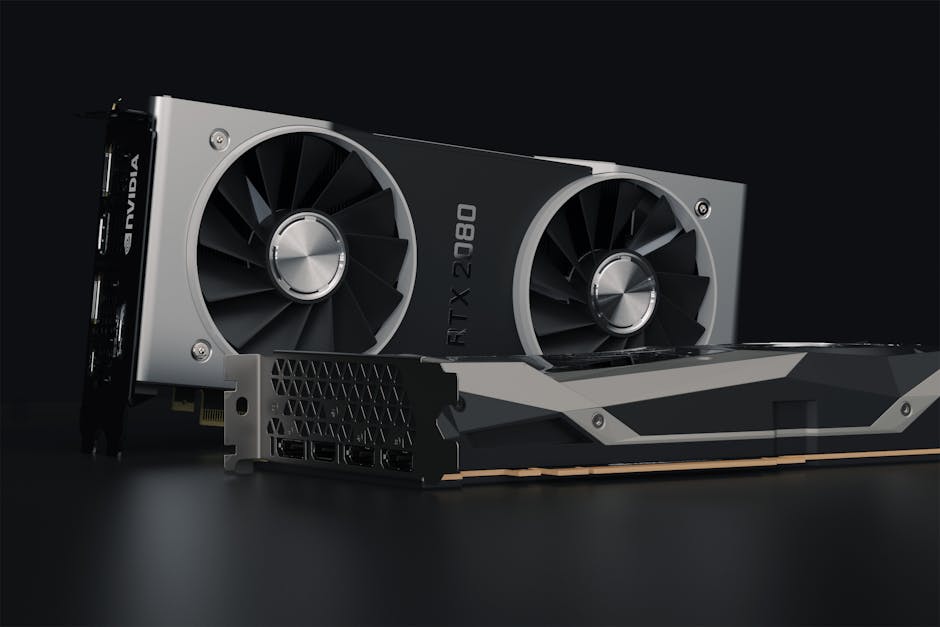
Training a diffusion model from scratch can cost hundreds, not millions. The full math behind a 210M DiT built in 3.5 days on one RTX PRO 6000.

The OpenAI Navier-Stokes run reportedly burned $40M and 130 billion tokens yet produced no verified proof. Verification, not generation, now binds.

Netflix MAPS teardown: how multimodal asset personalization ranks artwork and previews per member, what results it drives, and which patterns transfer.

Meta's AI second brain shows why agents live or die on the knowledge supply chain, not the retrieval stack, and what small teams can copy first.
Hands-on AI text watermarking in Python: how the three families work, what survives copy-paste, edits, and paraphrasing, and when to watermark or detect.

KV cache math explains why every decoded token reads the whole context, and what eviction and quantization can cut from million-token agent bills today.

GPT-6 Astra pricing pitches an AI engineer under $6 an hour. We audit the real per-task costs, hidden token overhead, and what saturated benchmarks skip.

Build a prompt dependency graph to compute the blast radius of any prompt change and rerun only the evals your multi-prompt LLM system needs.