SteerTTS Review, a Prosody Control Plane for Voice Agents
SteerTTS review: does z-score prosody control work as the control plane for LLM voice agents? Latency math, CPU feasibility, and a steerability harness.

The launch chatter around SteerTTS fixates on the wrong number. Yes, a 23M-parameter English model that reportedly synthesizes four to eight times faster than real-time on a plain CPU is handy, but small-and-fast is solved territory; Piper has covered Raspberry Pi-class synthesis for years. The actual bet is the control surface. SteerTTS exposes twelve prosody dimensions as z-scores relative to the selected voice's neutral speech, which means an orchestrating LLM can slide pitch, rate, and loudness per sentence, mid-conversation, with numbers instead of markup. That is precisely the interface TTS for LLM voice agents has lacked: the synthesizer stops being a fixed-style player and becomes an actuator a planner can drive. This SteerTTS review treats that actuator as an engineering economics problem. Is the CPU real-time claim credible, where do steering deltas land inside a turn-taking latency budget, and how do you measure steerability before wiring an LLM to it. All three questions get answered in the sections below, ending in a verdict.
Stay in the loop.
Get the latest posts and exclusive content delivered to your inbox.
Join 10 readers. No spam. Unsubscribe in one click, anytime.
What SteerTTS Is and What the Launch Post Leaves Out
Per the developer's launch post, SteerTTS pairs a 9.6M-parameter acoustic model (attention plus a bidirectional Mamba-style block, FastPitch-style spectrogram prediction) with a Vocos vocoder, landing total parameters at 23M. The controls are the story: rate, loudness, median pitch, pitch range, final rise and fall, pauses, spectral tilt, and several breathiness-related measures including CPPS, each a z-score relative to the chosen voice. Around that core sit 51 style tags, free-text prompts resolved into inspectable JSON, inline markup such as [pause 400ms], sentence-level streaming, 2,825 built-in voices, and experimental zero-shot cloning.
The reported numbers deserve their reputation labels, because every one is developer-reported on unspecified hardware. The post claims RTFx of roughly 60 to 80 on an RTX 5070, CPU RTFx around 4 to 8 with the optional flow refiner disabled, first streamed audio in about half a second on CPU, and roughly 1.8% WER on Open TTS Leaderboard English sets, run locally rather than as an official submission. Credit where due, the weaknesses section is unusually candid: loudness, pitch, and tilt steer reliably while pause, voicing, and CPPS controls are weak; emotion tags behave as coarse style switches an independent classifier mostly cannot tell apart; cloning similarity is low; and free-text prompts fail on negation. No human listening evaluations exist yet.
What is missing is everything a production decision needs: the exact test CPU, RTF under a co-located LLM, time-to-first-audio distributions rather than a single figure, and any third-party replication. You can poke the controls yourself in the hosted demo space, and a SteerTTS launch writeup recaps the launch claims, but neither substitutes for measurements on your hardware.
The CPU Real-Time Claim, Checked With Parameter Arithmetic
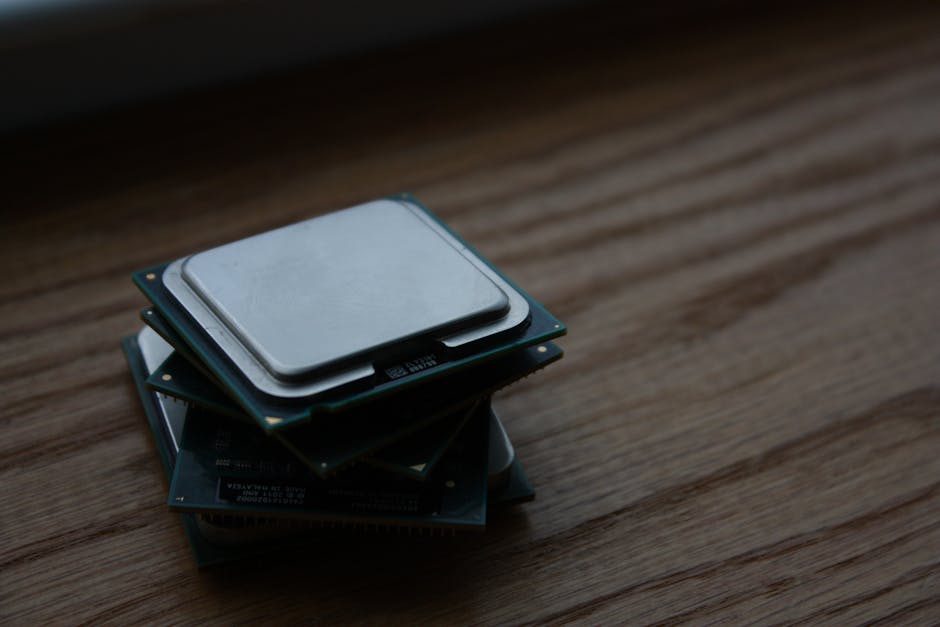
For real-time CPU text to speech, parameter count is a weak predictor of quality and a decent predictor of feasibility, because synthesis cost scales with compute and memory traffic per phoneme and small models move less of both. SteerTTS's 23M is small even by local-TTS standards: Kokoro's quality-focused model runs around 82M, and Piper's VITS checkpoints live in the same tens-of-millions neighborhood while targeting Raspberry Pi-class hardware. At int8 precision a 23M-parameter model occupies roughly 23MB of weights, which keeps it cache-friendly and leaves the vocoder as the usual bottleneck.
The architecture supports the claim too. FastPitch-style acoustic models are non-autoregressive, and Vocos is a compact vocoder built with CPU efficiency in mind; the launch arithmetic implies it accounts for the remaining ~13M parameters. An RTFx of 4 to 8, four to eight audio seconds per second of compute, reads as plausible rather than miraculous for this model class on a modern desktop CPU.
Plausible is not measured. The real-time factor is synthesis time divided by audio duration, the inverse of the developer's RTFx multiplier: lower is better, and anything under 1 counts as real-time. It is a property of a specific runtime, thread count, and workload, never of the weights alone. The number moves with everything: runtime choice, since ONNX-style quantization routinely shifts CPU throughput by multiples; chunk size; whether the flow refiner runs; and, decisive for voice agents, whether a local LLM is saturating the same cores. The developer's single-machine figures say the claim is worth testing. The harness below is the test.
Where Prosody Control Lands in the Turn-Taking Latency Budget
In LLM voice agents, users perceive time-to-first-audio and the cadence of subsequent chunks, so the metrics that decide the CPU claim are TTFA and per-chunk deadline adherence, not average throughput. Sketch a budget with explicit assumptions, then replace them with your own measurements:
| Stage | Assumed cost | Basis |
|---|---|---|
| ASR endpointing | 150ms | assumption |
| Orchestrator LLM first token | 250ms | assumption |
| TTS time to first audio | 300 to 500ms | assumption anchored to developer-reported ~0.5s |
| Transport and jitter buffer | 100ms | assumption |
| Total perceived response | 800 to 1000ms | illustrative sketch |
At the claimed ~0.5s, first audio alone can eat half of a tight conversational budget. Sentence-level streaming helps, because the orchestrator only needs enough text to enqueue the first sentence, but it also creates the constraint that makes SteerTTS interesting: if audio ships on a fixed chunk cadence, a prosody delta for the next sentence must reach the synthesizer before that sentence's text is enqueued. The steering window is the pipeline's synthesis lead time, not the playout time.
That converts LLM-driven prosody from an API flag into a scheduling problem. The practical pattern is to make the orchestrator emit intent as structured output alongside the text, one JSON object per sentence with the z-score deltas attached. The mechanism does the work: deltas and text arrive atomically, so nothing races the chunker. A separate post-hoc control call loses that race whenever the synthesis queue is shallow, which is exactly the regime a low-latency open source TTS stack lives in.
Contention is the quiet killer. RTFx of 4 to 8 implies a 3-second sentence synthesizes in roughly 0.4 to 0.75s, comfortable headroom until a local LLM takes the cores. Pin the TTS thread pool to reserved cores or budget for degraded RTF, and measure both configurations.
Z-Score Steering vs SSML vs Style Tags vs Bigger Fixed Models
This fight is not about which mechanism sounds best. It is about which interface an orchestrating LLM can actually drive, and every option charges for the privilege: z-scores charge you a calibration layer, SSML charges you markup validation, style tags charge you resolution, and fixed-style models charge you the control itself.
The alternatives each fail differently:
| Mechanism | Granularity | Composability | Latency cost | Deployment surface | LLM ergonomics |
|---|---|---|---|---|---|
| Z-score steering | Continuous, per sentence | High, independent axes | None beyond synthesis | Local CPU | Numeric, trivial to emit |
| SSML | Per tagged element | Medium, nested markup | Cloud adds network RTT | Mostly cloud engines | Verbose, human-readable |
| Style tags | Coarse switches | Low, mostly exclusive | None | Model-dependent | Easy but blunt |
| Fixed-style models | None at runtime | Not applicable | None | Local CPU or GPU | Pick a voice and accept it |
The calibration layer
The z-score interface is the product. A +1σ rate delta means one standard deviation faster than this voice's neutral speech, applied without retraining and shiftable at fine granularity. It is machine semantics: compact, composable, voice-relative, and meaningless to a human reader. Production use therefore needs a calibration layer mapping conversational intent to deltas, and that layer is also what makes numeric steering auditable: an intent-to-sigma table a human can review, version, and diff, sitting between planner and synthesizer. An apology might map to rate −0.4σ, loudness −0.6σ, and a final pitch fall −0.3σ; emphasis on a critical number might map to rate −0.5σ with pitch range +0.5σ on that sentence. Sketches, not gospel. You build the real map by listening.
SSML in practice
The standard critique of SSML, portability, is real but secondary. The W3C SSML specification defines a prosody element covering pitch, rate, and volume, and cloud engines implement it richly, as the Azure prosody markup docs show. Move away from cloud and support thins out fast: the browser speech synthesis API exposes simple rate and pitch properties rather than general SSML, and local engines commonly implement subsets or nothing.
The deeper weakness for a voice agent is emit-and-validate ergonomics. A planner emitting SSML must template valid markup around arbitrary generated text, escaping entities and nesting prosody tags correctly, and when it gets that wrong the engine rarely throws: it reads the markup aloud, drops the tag, or mispronounces around it, so the failure ships to the user as audio instead of surfacing as an error. A z-score payload inverts that failure mode. It is one small JSON object per sentence, a handful of numeric fields, checked against a schema before it ever reaches the synthesizer; malformed steering fails loudly at the boundary rather than silently in the listener's ear. Compactness follows from the same shape: numbers instead of a tagged string wrapping every clause you want to shape. And where SSML does work, its granularity is per tagged span, coarse for mid-turn micro-corrections, while the cloud round trip contradicts the reason you run local inference in the first place.
Style tags and fixed models
Style tags, including SteerTTS's own 51, fail because they duplicate state the planner already holds. The orchestrator knows the conversational intent as structured output; a style tag asks it to compress that intent into a coarse label the synthesizer then re-expands, losing resolution at both ends of the trip. The developer reports an independent classifier mostly cannot distinguish them, which matches how they behave: broad switches, not instruments. Tags are ergonomics for humans configuring a persona once, not the interface a mid-turn loop runs on.
Bigger fixed-style models compete on the other axis. Kokoro's GitHub repository ships an 82M model that prioritizes naturalness, and Piper trades control for footprint and speed. With a fixed-style voice, you choose prosody once, at voice-selection time.
Decision rules by workload
Z-score prosody steering wins when a planner must modulate delivery mid-turn without changing voice, on local hardware. SSML wins when you already run a cloud engine and want declarative, human-auditable markup, with a text pipeline that can guarantee valid XML. Style tags suit coarse persona shifts a human configures once. A fixed-style model wins when naturalness per minute matters more than control, which is long narration by definition.
A Five-Step Steerability Evaluation Harness

Steerability without measurement is undeployable, and no launch post reports it. This harness is how to evaluate TTS steerability on hardware you control, and it is the part of this SteerTTS review worth stealing for any model you audition. Thresholds are starting points; tighten to taste.
Load and latency benchmarks
- Bench RTF under full-stack load. Measure with the orchestrator LLM, ASR, and transport running concurrently, never in isolation. Pass: RTF at or below 0.5, meaning 2x real-time headroom, in the loaded configuration you will actually ship.
- Measure time-to-first-audio, cold and warm. Record the distribution, not the best case. Pass: TTFA fits the remaining budget after LLM first token, with margin for jitter.
Delta targeting and listening tests
- Verify delta-targeting accuracy. Grid-sweep the controls the developer calls reliable (median pitch, rate, loudness) across sigma values −2 to +2 on your chosen voices. Measure median F0 with a pitch tracker, sentence duration, and RMS, then check monotonicity between commanded sigma and measured effect, with Spearman rho at or above 0.9 as a starting bar. A control that moves non-monotonically is worse than one that does not move, because your calibration map silently lies.
- Listen at the extremes. Sweep to ±3σ and hunt for warbling, clipping, and spectral artifacts, territory with no public listening evaluations. Use an ABX perceptual test protocol with a handful of raters comparing steered against neutral renders, because asking people "does this sound bad" reliably produces noise.
Failure modes and the usable envelope
- Probe the known failure modes. Free-text prompts containing negation, emotion tag discriminability under a classifier or ABX, interaction effects such as rate deltas dragging pitch, and clipping at high loudness sigma. Whatever fails goes on the blocklist your calibration layer enforces.
If steps 1 through 3 pass, SteerTTS earns the actuator role. If only some controls pass, restrict the calibration map to those and leave the rest at zero. Partial steerability with a known envelope still beats what SSML gives you locally.
SteerTTS Review Verdict and Production Stack Fit
Verdict: conditional adopt. Prototype with it now, inside internal tools and anything non-commercial. Wait on production, for three reasons unrelated to voice quality. The weights ship under CC BY-NC 4.0, so commercial deployment needs a licensing conversation even though the code is MIT. There are no human evaluations, so naturalness rests on WER and your own ears. And English-only coverage bounds where it can ship.
The architecture that survives contact with reality is hybrid, because the economics split cleanly. Run a steerable small model for interactive turns, where sentences are short, control outearns polish, and the LLM has fresh intent every few seconds. Run a fixed-style quality model such as Kokoro for long narration, where nobody is steering and naturalness per minute wins. Route by turn type, not by model loyalty.
Measure three things this week: RTF under load on the exact shipping CPU, the TTFA distribution, and monotonicity of the three reliable controls. One afternoon of scripting converts the launch post's claims from folklore into your data.
The verdict moves if any of these land: an official leaderboard submission, published human evals, refiner-on CPU numbers, a commercial license path, or more languages. Either way, SteerTTS's durable contribution is the interface. Quality is table stakes and gets matched; a cheap, fast, numeric prosody control plane an LLM can drive mid-turn is the part worth copying, and worth benchmarking on your hardware before someone else ships it.
Stay in the loop.
Get the latest posts and exclusive content delivered to your inbox.
Join 10 readers. No spam. Unsubscribe in one click, anytime.
About the author
Rachel Brennan
AI Research Editor
Rachel tracks AI research so the rest of us don't have to. With a background in NLP and a habit of reproducing papers, she turns new models and methods into ideas you can actually use.
Related Posts

Gemini 3.8 Live Extended Thinking Needs a Latency Budget
Gemini 3.8 Live extended thinking adds reasoning time to a realtime voice agent. The latency-budget math tells you when it helps and when it is dead air.
TontaubeV1 Review With Serving Math You Can Run
This TontaubeV1 review audits the 2.9B character-level TTS model with serving math builders can verify, covering VRAM, latency, and long-form narration.

Beam 501B Self-Hosting Cost, When Owning Beats Renting
We audit the real Beam 501B self-hosting cost, from GPU memory floors to fine-tuning and ops, and where owning weights beats renting a frontier API.