TontaubeV1 Review With Serving Math You Can Run
This TontaubeV1 review audits the 2.9B character-level TTS model with serving math builders can verify, covering VRAM, latency, and long-form narration.

The launch thread for TontaubeV1 makes five claims: a 2.9B-parameter open-weight TTS model, character-level text modeling, expressive long-form narration, low-latency local inference, and solid English and German support. Every one of those claims is testable at your desk with arithmetic and a half day of GPU time, and none of them ships with the numbers a builder needs. This TontaubeV1 review supplies those numbers as derivations you can reproduce, then runs the adopt-or-pass logic each use case actually depends on. The short version: the character-level bet looks stronger for hours of narration than for low-latency voice agents, and the gap between the two is exactly where the launch thread is silent.
Stay in the loop.
Get the latest posts and exclusive content delivered to your inbox.
Join 10 readers. No spam. Unsubscribe in one click, anytime.
To be fair about what the thread does publish: it names a 24 GB VRAM floor for the low-VRAM and balanced profiles (32 GB for high-throughput), and it shares a 400-passage LLM-as-a-judge run where TontaubeV1 scored 50.1% against ElevenLabs Flash v2.5 on prosody. The authors themselves tell you to take that with salt. What is missing is everything else: no real-time factor, no named reference GPU, no latency measurements, no reproducible test set, and no license terms in the post itself. That makes the claims unverifiable, not false. The correct response is an audit, and here is how to run it.
How This TontaubeV1 Review Tests Every Claim
Every launch claim below converts into a local test with a time budget attached, using nothing beyond the released inference code and standard GPU utilities.
| Launch claim | Local test | Time |
|---|---|---|
| 2.9B parameters, local | VRAM arithmetic at three precisions, then measure actual peak | 30 min |
| Character-level modeling | Heteronym, acronym, and date-format battery | 1 to 2 hr |
| Long-form narration | Multi-chapter drift and seam check | 2 to 3 hr |
| Low-latency local inference | RTF plus first-audio latency measurement | 1 hr |
| English and German | German edge-case battery first | 1 hr |
Run the German battery first. German is the cheapest claim to falsify. With no phonemizer in the pipeline, the model must resolve pronunciation from raw characters alone, and German compounds, locale dates and numbers, and English loanwords make that character-to-sound mapping most ambiguous, a harder stress test than any English edge case. One focused hour can settle the multilingual claim before you spend the rest of the half day. Treat every number you cannot reproduce as pending, including the authors' own 400-passage LLM-judge run. This table is the map; the half-day benchmark plan later in this review is the schedule.
What Character-Level Modeling Trades Away
Most modern LLM-based TTS systems reuse the backbone's BPE tokenizer, append audio tokens, and predict the next token. TontaubeV1 instead starts from a Qwen3-1.7B checkpoint for its semantic model and forces the tokenizer to emit raw characters for spoken text. The authors' stated reasoning is sound: TTS training sees far fewer text-token combinations than full LLM pretraining, so rare BPE token sequences, especially around special characters, push the model out of distribution. Characters make the text-to-sound mapping simpler and keep the input distribution bounded.
The bet has precedent. Char2Wav modeled end-to-end synthesis from character inputs back in 2017, and Suno's Bark took a character-based approach to multilingual, expressive speech more recently. The trade you accept is documented in any G2P conversion survey: classical pipelines offload pronunciation to an explicit grapheme-to-phoneme stage, per-language and imperfect but inspectable. TontaubeV1 deletes that stage. Pronunciation knowledge now lives inside the weights, which removes per-language G2P maintenance but moves the failure modes in with it.
Concretely, the first things to break in a phonemizer-free, character-level pipeline are:
- Heteronyms. "Read" past tense, "lead" the metal, German "Modern" the noun versus "modern" the adjective.
- Acronyms. Whether NASA comes out spoken and IBM comes out letterized is a learned convention, not a rule.
- Numbers and dates. "03.04.2025" is April 3rd in German and March 4th in American English; "1.5" is one-and-a-half in one locale and fifteen hundredths in another.
- Spelling drift. Character-level models can over- or under-generate repeated characters, which surfaces as stretched or swallowed syllables.
Compare this with Piper, the standard lightweight local option, which pins pronunciation explicitly through espeak-ng phonemization. Piper sounds flatter, but its mistakes are predictable and fixable in the phoneme dictionary. Character-level TTS trades that inspectability for expressiveness. Whether the trade pays is an empirical question, and the battery in a later section answers it.
VRAM and Latency Math for 2.9B Parameters
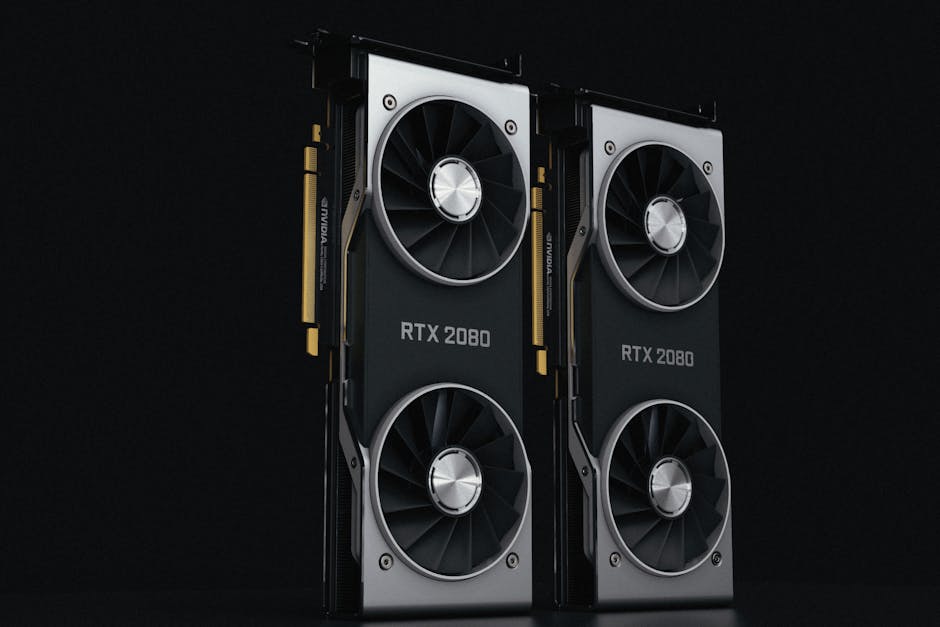
Can a 2.9B TTS model run locally? The weights arithmetic says yes on modest hardware. The serving stack says not yet. Both numbers matter, so derive them separately.
Weights are the floor
Weights memory is parameters times bytes per parameter. Standard quantization memory math gives:
| Precision | Bytes per parameter | 2.9B weights only |
|---|---|---|
| FP16 | 2 | ~5.8 GB |
| 8-bit | 1 | ~2.9 GB |
| 4-bit | 0.5 | ~1.5 GB plus overhead |
That 5.8 GB figure is the FP16 hardware floor for the weights alone, before activations, KV cache, streaming state, and codec buffers. At 8-bit it drops to roughly 3 GB, and 4-bit pushes under 2 GB. On paper, a 12 GB card fits comfortably.
The bill is four times the floor
The actual release requires 24 GB for the low-VRAM and balanced profiles, per the launch post, which attributes the gap to vLLM's KV-cache reservation and a multi-engine serving setup. The decomposition is plausible. Character-level tokenization multiplies token counts several-fold versus BPE for the same text, and every token position in an autoregressive semantic model carries KV-cache cost. On top of that sit the acoustic codebook models (the remaining parameters beyond the 1.7B semantic backbone) and the streaming path that, per the launch thread, re-encodes overlapping DualCodec windows into the VibeVoice acoustic space under a shared causal decoder state.
So the honest answer to "can it run locally" is: yes on a 24 GB GPU today, unknown below that until the promised quantized builds land. The 5.8 GB floor tells you what the model could become; the 24 GB requirement tells you what it is.
One more separation, because launch language blurs it. VRAM is capacity. Real-time factor is throughput, audio seconds produced per second of compute. First-audio latency is the delay before the listener hears anything. A card can have idle VRAM and still fail an agent latency budget, which is why the voice-agent section measures the third number specifically.
Long-Form Narration Drift and Chunk Seams
Single-sentence demos flatter every TTS system. Hours of audio fail differently, through compounding speaker drift, prosody drift, and audible chunk boundaries. Long-form consistency is a recognized open problem, as recent long-form synthesis research makes clear, and it is decided by pipeline design, not sample quality.
To its credit, TontaubeV1's chunking is engineered rather than bolted on. The launch describes paired text and audio split markers that share logical positions, roughly 25 reserved character positions at each boundary, a sliding window where the semantic model sees the previous text and audio chunk plus a lookahead into the next text, and a streaming decode that keeps the stable middle sections of overlapping codec windows. Text inches forward one character position at a time, while audio advances at a rate of 12.5 frames per second, so the pipeline realigns the two after every chunk. This is a genuine attempt to make seams disappear.
The audit question is whether it survives chapter 20. The scale math puts drift in perspective: a 10-hour audiobook at a real-time factor of 0.5 costs 5 hours of synthesis, and any per-chunk inconsistency compounds across hundreds of boundaries. The project that generated Gutenberg-scale audiobooks shows the pattern from the production side: hours of output are achievable with a deliberate pipeline, and consistency across that pipeline, not sentence quality, is the hard part there too.
Your long-form tests:
- Synthesize chapters 1, 10, and 20 with the same reference clip for the zero-shot clone, then A/B the first and last for speaker similarity, energy, and pacing trend.
- Listen specifically at chunk boundaries for clicks, breath resets, or abrupt prosody. Zoom into the waveform joins.
- Normalize upstream anyway. Expand ambiguous dates and currency strings to words before synthesis even though the model handles characters natively. Belt and suspenders is the correct posture until your battery proves otherwise.
The Half-Day Benchmark Plan the Launch Should Have Shown
Run this in order. Every step outputs a number you can compare against the next release or a competitor.
0:00 to 0:30, footprint. Load each profile and record peak memory with GPU utilities and framework allocators, not just idle readings. Compare against the claimed 24 GB and 32 GB tiers.
0:30 to 1:30, RTF done right. Warm up first, then synthesize a fixed five-minute script. Per the standard real-time factor definition, divide wall-clock synthesis time by output audio duration. Report mean and variance across chunks, per profile. Chunk variance, not the mean, predicts audiobook hiccups.
1:30 to 2:30, first-audio latency. With streaming on, time from input ready to first audible sample. Then with streaming off. The delta is the cost of the windowed decode path, and it is the single number that decides agent fit.
2:30 to 4:00, drift battery. The three-chapter test above.
4:00 to 5:00, the five-case listening battery.
- Heteronyms. English "read/read" and "lead/lead"; German "Modern" the noun versus "modern" the adjective.
- Dates and numbers. "03.04.2025" in German and English prompts; "€1.234,56"; a bare "1.5".
- Acronyms. NASA, FIFA, IBM, SPD. Correct behavior differs per word and per language.
- German compounds and loanwords. "Geschwindigkeitsbegrenzung", "herunterladen", then "das Meeting" and "die Deadline" inside German sentences, which should keep English pronunciation.
- Spelling drift and junk. Roman numerals, mixed-case tokens, a URL, repeated characters.
Fail case 4 and the multilingual claim narrows to English. Fail case 5 and long-form output will accumulate artifacts no benchmark score discloses.
Voice-Agent Fit and the First-Audio Latency Budget

The character-level bet that pays off in narration is a tax on agents. Spelling text out character by character multiplies the serial decode steps before the first semantic codec token even exists, and the first audible sample still needs the acoustic stack and codec decode after that. The windowed streaming path adds further serial stages before first audio: re-encoding overlapping windows, holding out the stable middles, threading a shared causal decoder state. Every stage that fixes seams is also a stage the listener waits through.
For context, and strictly as planning heuristics rather than laws: conversational speech is commonly budgeted at roughly 300 to 500 ms end to end, and the upstream components (network round trip, turn-end detection, STT finalization, LLM first token) can plausibly total 450 to 1000 ms across setups before TTS is even scheduled. Whatever remains is the TTS budget, which is why first audio is the number to measure rather than estimate.
Nobody has published TontaubeV1's first-audio figure. It could measure 150 ms. It could measure 900 ms. That absence is itself the finding.
Two more measurements matter. The vLLM multi-engine stack was built for concurrent sessions, so single-stream first-audio latency and throughput per GPU may tell opposite stories; record both, plus the streaming-on versus streaming-off delta the benchmark plan times. And a 24 GB floor per instance changes agent hosting economics outright, since the Piper-class alternative runs on hardware agents already have.
Adopt or Pass by Use Case
| Use case | Call today | Gate that flips it |
|---|---|---|
| English or German prototyping on a 24 GB GPU | Adopt | none, it is the fun kind of testable |
| Audiobook and narration pipelines | Monitor | drift and seam battery passing across 20 chapters |
| Voice agents under 500 ms | Pass for now | published or measured first-audio latency |
| Anything commercial | Blocked | license file review |
Positioning helps here. Against Piper, TontaubeV1 trades footprint and predictable phonemes for expressiveness and long-form design. Against XTTS-class multilingual cloning models, it trades ecosystem maturity for a long-form-first chunking scheme. The niche it is genuinely claiming is expressive narration on one big GPU, and that claim is the most testable of the five.
The license gate deserves emphasis. Open-weight availability does not establish commercial use or redistribution rights. The license file on the model card, not the launch thread, determines whether production adoption is even on the table, so read it before the benchmarks seduce you.
Verdict and Open Questions
The architectural bet is credible and precedented, and the long-form engineering (position-aligned chunk markers, sliding context windows, stable-middle streaming decode) reads as real design rather than marketing. But every performance number available is either self-run, like the 50.1% LLM-judge result the authors themselves hedge, or absent. The independent checks to watch are placement on TTS Arena, which the team says it plans to enter, and standing on the Artificial Analysis Text to Speech Arena. That submission, a quantized build under the 24 GB floor, and a published first-audio number on named hardware are the three triggers that would change any call in the matrix above.
Until then, the open questions are the ones no thread can answer: license terms, training-data provenance for the claimed 7 languages and ~200k hours, what the checkpoints actually contain, and whether character-level pronunciation holds across a full German novel. Half a day of arithmetic and five listening cases settles more of that than launch-day enthusiasm ever will.
Stay in the loop.
Get the latest posts and exclusive content delivered to your inbox.
Join 10 readers. No spam. Unsubscribe in one click, anytime.
About the author
Rachel Brennan
AI Research Editor
Rachel tracks AI research so the rest of us don't have to. With a background in NLP and a habit of reproducing papers, she turns new models and methods into ideas you can actually use.
Related Posts
Beam 501B Self-Hosting Cost, When Owning Beats Renting
We audit the real Beam 501B self-hosting cost, from GPU memory floors to fine-tuning and ops, and where owning weights beats renting a frontier API.
Gemini 3.8 Live Extended Thinking Needs a Latency Budget
Gemini 3.8 Live extended thinking adds reasoning time to a realtime voice agent. The latency-budget math tells you when it helps and when it is dead air.
OpenAI Amp Review, the Builder's Verdict on a General Agent
This OpenAI Amp review maps GPT-6 Astra, Ultrafast, and GPT-Live-1 to agent duties, explains ChatGPT sign-in permissions, and gives an adopt-or-pass rubric.