Beam 501B Self-Hosting Cost, When Owning Beats Renting
We audit the real Beam 501B self-hosting cost, from GPU memory floors to fine-tuning and ops, and where owning weights beats renting a frontier API.

Hugging Face launched Beam, a 501B-parameter open model, on three verbs: own, customize, scale. The verbs are true as far as they go, and they stop exactly where the decision starts. The license was never what kept a frontier-class model out of your own serving stack; the memory floor, bandwidth-bound decode, and a standing ops bill were. This piece runs the Beam 501B self-hosting cost arithmetic that the announcement leaves out, and every number below is reproducible from public claims, with uncertainty labeled where it lives.
Stay in the loop.
Get the latest posts and exclusive content delivered to your inbox.
Join 10 readers. No spam. Unsubscribe in one click, anytime.
What the Beam Launch Promises and What It Skips
The Beam launch post sells ownership of an open-weight frontier-class model and stops there. You can download the weights, tune them, and scale them to your traffic. What the pitch delivers is verbs without arithmetic: no GPU count, no hourly rate, no throughput expectation, and nothing on the fine-tuning, operations, or governance bill that arrives attached to the weights.
That gap is the whole game for a team weighing a metered frontier API against ownership. Consider this the Beam Hugging Face review the announcement could not be, an audit instead of a pitch. One caveat up front: independent Beam throughput benchmarks had not published when this was written, so serving numbers here are first-principles estimates from platform specifications rather than measured results. The memory and cost math does not have that problem. Bytes and dollars are arithmetic.
The Memory Floor for 501B Parameters
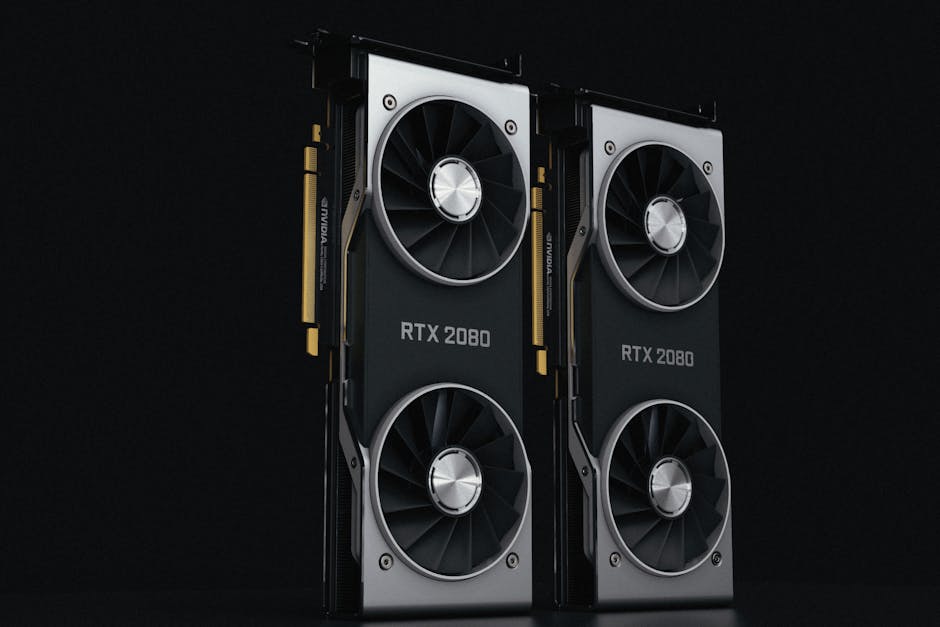
Start with the first question every builder asks: how much GPU memory does it take to run a 500B-parameter model? The weights-only answer is one multiplication per precision.
Worked example one, FP16. Each parameter needs 2 bytes at FP16 or BF16. 501 billion parameters times 2 bytes is about 1,002 GB, call it 1 TB of weights. A standard 8xH100 node carries 640 GB total. FP16 Beam does not fit on one node of that class; you are in 16xH100 or 8xH200 territory before serving a single token, and the 8xH200 route leaves roughly 120 GB of headroom for everything else.
Worked example two, quantized. INT8 halves the floor to roughly 501 GB, which squeezes into 640 GB with about 139 GB spare. 4-bit lands near 250 GB, comfortable on 8xH100 with about 390 GB left over. Those are floors for the weights alone.
Two overheads stack on top. First, Beam's mixture-of-experts routing cuts the compute burned per token because each token visits a subset of experts. It does not cut the resident footprint, since any token can route to any expert, so every expert must sit in memory. That is why GPU memory requirements for LLMs of this class count total parameters rather than active ones, and why MoE serving costs keep surprising teams that budgeted for sparsity.
Second, the KV cache. Working from the standard KV cache memory formula, models in this weight class commonly land between a third of a megabyte and a full megabyte per token at FP16, depending on attention grouping. Half a megabyte per token means one 32,000-token context costs about 16 GB, and concurrency multiplies that figure. A realistic deployment number is the weight floor plus peak concurrent KV cache plus workspace.
The Bandwidth Ceiling on Decode
LLM inference economics at this scale are governed less by FLOPs than by memory bandwidth. Decode, the token-by-token generation phase, is bandwidth bound: to emit one token, the hardware streams the active weights once, and single-stream latency is set by how fast the node can move bytes.
Worked example three, a decode ceiling. H100 SXM memory bandwidth runs roughly 3.35 TB/s per GPU per the HGX H100 platform specs, so an eight-GPU node has about 26.8 TB/s aggregate. Suppose Beam activates on the order of a tenth of its parameters per token, a common sparse design point. At FP16 that is roughly 100 GB of expert weights streamed per token. Divide 100 GB by 26.8 TB/s and you get about 3.7 ms per token, an idealized ceiling near 270 tokens per second for a single stream with perfect sharding and zero overhead. Real systems capture a fraction of ideal, and routing, interconnect, and kernel overheads commonly pull single-stream generation for models in this class down to the tens of tokens per second. Treat that as an estimate band, not a spec.
The lever that rescues utilization is batching. With 64 concurrent requests, one pass over the active weights amortizes across 64 tokens, and the node shifts from bandwidth bound toward compute bound. This is the mechanical reason ownership economics only work for traffic you can batch, and why spiky, low-volume traffic is the worst possible fit for a fixed hourly bill.
What a Beam-Class Node Costs Per Hour
Now the money. List rates move constantly, so treat these as bands and verify against current pages before modeling anything.
Hyperscaler on-demand lists put a p5-class 8xH100 instance in the high double digits of dollars per hour; AWS on-demand pricing is the reference list. GPU specialists undercut that materially, and Lambda's published GPU rates typically place the same node class in the mid-tens per hour. A defensible planning band is roughly $25 to $100 per hour depending on provider and commitment.
Always-on means 730 hours a month. Any hourly rate becomes a budget line before you have served a single token.
Worked example four, the monthly bill. That band puts single-node Beam 501B self-hosting cost between roughly $18,000 and $73,000 per month, before tuning, before a second node for availability, before ops. Annual commitments pull the low end down; a redundancy replica pushes the high end up. However you slice it, a minimal always-on deployment is a five-figures-per-month commitment, and that is the number the launch post never prints.
The Customization Bill at 501B Scale
Customize is the second verb in the pitch, and fine-tuning a 501B model splits into two very different sports.
Full-parameter fine-tuning is out of reach for nearly all builder teams. A common planning rule for mixed-precision Adam-style training is 12 to 20 bytes of memory per parameter across weights, gradients, and optimizer states. At 501B parameters, that is 6 to 10 TB of accelerator memory before activations and sharding overhead. This is a multi-node cluster booking, scheduled and priced like infrastructure, not a line item on a sprint board.
LoRA-style parameter-efficient tuning is the realistic path. Freeze the base weights, train low-rank adapters, and the memory problem collapses back toward serving scale, with a QLoRA-style 4-bit base cutting it further. But LoRA fine-tuning cost at 500B scale is dominated by iteration, not by the run. Data preparation, evaluation harnesses, ablations, and safety passes happen many times each, while the tuning run itself is hours on a rented node. Budget for the loop, not the run.
The Ops Load Nobody Prices In
Ops cost scales with model weirdness, and a 501B-parameter mixture-of-experts model is weird. A dense 70B on one node has a settled runbook. Beam-class serving adds failure modes that exist only because the model routes, quantizes, and streams roughly a terabyte of weights, and each mode is a standing line item:
- Expert-routing skew. The router picks which experts fire for each token. If traffic drift or a fine-tune concentrates load on a few hot experts, tail latency climbs first, and any routing fix risks changing which experts fire on identical prompts, which surfaces as a quality shift. Somebody has to watch expert load distribution, a dashboard no dense-model runbook ships with.
- KV-cache OOM at concurrency spikes. The arithmetic that set your memory floor also sets your crash boundary. At about half a megabyte per token, one 32,000-token context costs around 16 GB, so an 8xH100 node holding 4-bit weights with roughly 390 GB spare fits about two dozen such contexts before the rest goes to workspace. Launch-day spikes do not negotiate with that number; they OOM against it.
- Quantization revalidation. Every weights revision and every engine bump can move 4-bit accuracy. Quantized Beam is a lossy copy of a lossless artifact, so each bump means rerunning your evaluation harness before traffic lands on it.
- Engine churn, pinned. The serving stack moves fast, and production wants revision-pinned upgrades with a tested rollback path. That is scheduled engineering time whether or not anything breaks.
- Artifact hygiene and on-call. Model files are serialized objects, so deserialization hygiene is security work. And when generation quality degrades overnight, a human answers the page.
As a planning figure, ops commonly adds 30 to 50 percent on top of the hardware bill once a senior platform engineer's fully loaded time is counted. On the $18,000-a-month node, that is another $5,400 to $9,000. At the $73,000 end, it is roughly $22,000 to $36,500, which is most of a platform team. Renting an API folds this entire ledger into someone else's SLA.
Where Beam 501B Self-Hosting Cost Beats the API
The self-hosted LLM versus frontier API cost per million tokens comparison comes down to one division, with two conditions attached.
Worked example five, the crossover. Take a blended frontier API price on the order of $5 per million tokens, near the low end of what metered flagship models charge, and substitute your own blended input and output rates. A $20,000-per-month specialist node breaks even near 4 billion tokens per month. At $10 per million, the crossover halves to about 2 billion. A $70,000-per-month hyperscaler node at $5 per million pushes it out to roughly 14 billion. Both conditions must hold at that volume: traffic sustained enough to keep node utilization high, and a node actually able to carry the load at your latency target, which the batching math above governs.
So, is it cheaper to self-host a large model than rent an API? Only inside a band: sustained, predictable volume on the order of billions of tokens per month at sticker rates, or non-price constraints that dominate the decision, such as data residency, tight latency control, or a hard cap on metered spend. Three profiles show the spread:
| Workload profile | Monthly volume | Traffic shape | Verdict | Why |
|---|---|---|---|---|
| Product copilot on spiky SaaS usage | ~200M tokens | Peak-heavy, daytime | Rent | API spend at $5 to $10 per million runs to low four figures; no node pays off at that utilization |
| Document and data enrichment pipeline | ~4B tokens | Flat, 24/7, batchable | Borderline to own | Steady load keeps utilization high and the crossover lands near break-even |
| Regulated or on-prem deployment | Any | Varies | Own | Residency and flat spend caps outweigh the per-token arithmetic |
Owning Weights on Someone Else's Hub
There is a second, quieter catch. Beam ships through a hosting hub, and hubs are companies: ownership changes, distribution terms, storage policies, and tooling priorities all shift over time, without asking you. Open weights are only as durable as your copy of them.
The mitigation is cheap and boring. Mirror the artifacts (weights, tokenizer, configs, license text) into storage you control, pin exact revision hashes in deployment manifests, and vendor your serving container images. For a 4-bit deployment that is a few hundred gigabytes of object storage; FP16 approaches a terabyte. Either way, it is a rounding error next to the node bill, and it converts a governance question mark into a solved problem.
A Builder's Checklist for the Own Versus Rent Call
Rerun this own-versus-rent LLM inference audit against your real traffic in an afternoon:
- Pull actual token volumes from logs, blended across input and output, not from estimates.
- Derive the Beam Hugging Face model hosting requirements for your chosen precision: weights floor plus KV cache at your concurrency and context length.
- Price the node at your commitment level from at least two providers, including the replica you need for availability.
- Stress the utilization assumption. Measure your peak-to-average ratio before trusting any crossover number.
- Add ops overhead at 30 to 50 percent as a planning figure.
- Apply the rule: rent when monthly tokens times blended price sits below the all-in monthly bill, or when traffic is spiky; own when that product crosses the node-plus-ops line, or when residency and spend caps dominate.
One caveat to carry forward: every throughput figure here is a first-principles estimate from platform specifications, not a measured Beam benchmark. Independent results should publish soon, and when they do, rerun the bandwidth and crossover steps with real numbers. The memory floor and the monthly bill need no such correction, and those two figures alone reframe the launch pitch. What gates ownership of a frontier-class open model was never the license. The gates are three: a terabyte of resident weights, decode on the wrong side of the bandwidth ceiling, and a five-figure monthly habit that starts the day you boot the node.
Stay in the loop.
Get the latest posts and exclusive content delivered to your inbox.
Join 10 readers. No spam. Unsubscribe in one click, anytime.
About the author
Megan Caldwell
AI Engineering Lead
Megan has spent the last eight years building production ML systems, from recommendation engines to today's language model pipelines. She writes about the engineering that holds up under real load: retrieval, evaluation, and the unglamorous parts of shipping AI software.
Related Posts

Qwen3.8-Omni-Flash vs Gemini Flash Real Cost per Task
Qwen3.8-Omni-Flash vs Gemini Flash, normalized to dollars per multimodal task across audio and video billing units, tool loops, and self-host math.

TontaubeV1 Review With Serving Math You Can Run
This TontaubeV1 review audits the 2.9B character-level TTS model with serving math builders can verify, covering VRAM, latency, and long-form narration.
OpenAI Amp Review, the Builder's Verdict on a General Agent
This OpenAI Amp review maps GPT-6 Astra, Ultrafast, and GPT-Live-1 to agent duties, explains ChatGPT sign-in permissions, and gives an adopt-or-pass rubric.