Muse Glimmer Local Review Tests 30B Agents Under 20GB
This Muse Glimmer local review analyzes how 30B models compressed under 20GB VRAM trade latency, tool accuracy, and context for local agent workflows.
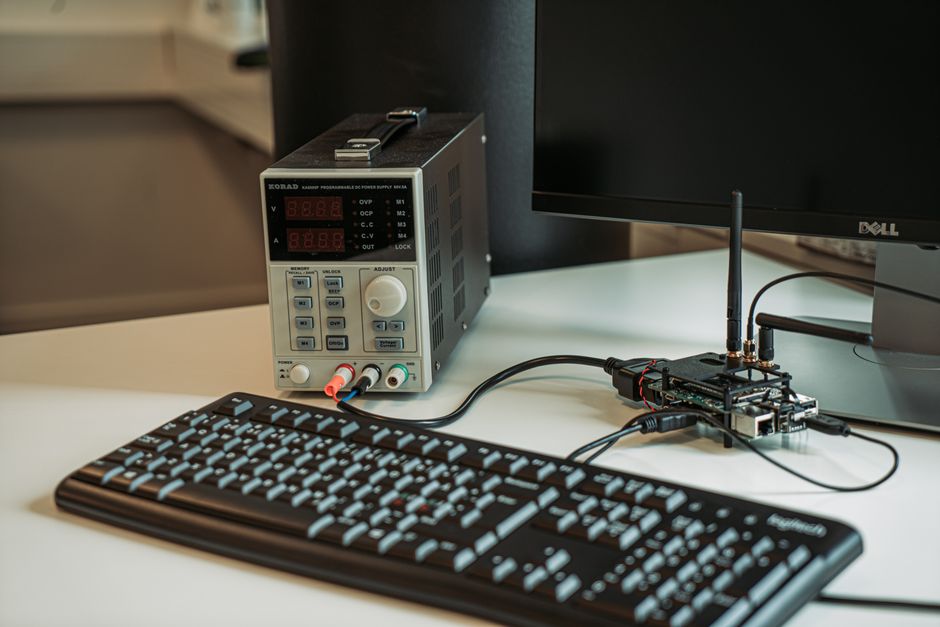
Meta's Muse Glimmer arrives with a pitch that resonates with developers tired of API bills and rate limits. The official launch announcement describes a model that is local-first, agentic, multimodal, and open-weight, seemingly purpose-built for self-hosted agent development. This Muse Glimmer local review analyzes whether a 30B multimodal model, compressed to fit under 20GB of VRAM, can actually sustain agent loops on consumer hardware. The compression cost is real, measurable, and reshapes what the model can do.
Stay in the loop.
Get the latest posts and exclusive content delivered to your inbox.
Join 10 readers. No spam. Unsubscribe in one click, anytime.
It works, but only within a narrow operating envelope. Builders who understand the constraints extract genuine value from the larger parameter count and integrated multimodal design. Builders who expect a 4-bit 30B model to behave like its uncompressed counterpart spend their time debugging failures baked into the quantization process itself.
The 20GB Proposition for Local Agent Builders
The appeal is immediate. Running Muse Glimmer locally eliminates per-token costs, keeps data on your network, and removes rate limits on agent iterations. For privacy-sensitive pipelines or autonomous prototype development, that independence is the entire value proposition.
But the 20GB figure refers to compressed model weights only. It does not include the KV cache your agent needs for context windows, the runtime overhead of the inference engine, or the vision encoder pipeline that multimodal inputs require. The sub-20GB VRAM AI model budget leaves less room for agent infrastructure than the headline number implies, and that gap is where most local deployment plans run into trouble.
The core tension is between parameter count and usable context. A larger model at 4-bit can deliver more reasoning depth per token than a smaller model at 8-bit, but only if your context window holds tool definitions, conversation history, and intermediate reasoning simultaneously. When KV cache pressure forces aggressive context truncation, the bigger model's reasoning advantage starts working against you.
Muse Glimmer Model Reference
Muse Glimmer's specifications define the compression trade-offs below.
| Specification | Detail |
|---|---|
| Parameters | 30B |
| Architecture | Multimodal transformer (native vision + language) |
| Compressed (4-bit) | ~15GB weights |
| Uncompressed (16-bit) | ~60GB weights |
| Quantization formats | GGUF, AWQ, GPTQ |
| Input types | Text and image |
| Context window | Configuration-dependent (typically 32K to 128K nominal); KV cache limits effective context under 4-bit |
| Recommended engine | GGUF with llama.cpp, AWQ with vLLM |
| Deployment | Local-first, open-weight |
The compressed footprint excludes KV cache, vision encoder overhead, and runtime memory. The next section breaks down how those residual costs consume what remains of a 20GB budget.
Quantization Reality and VRAM Overhead
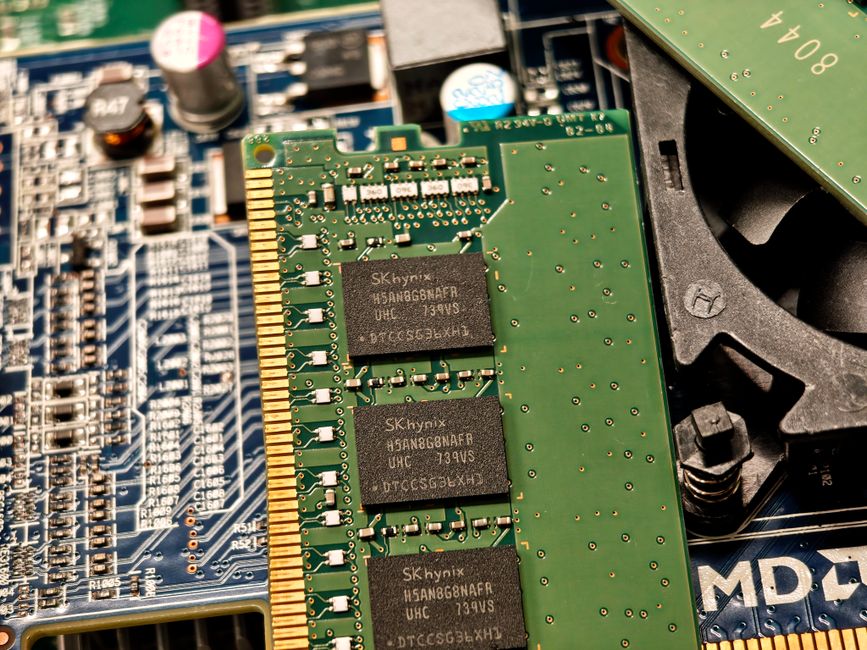
For agent builders, 4-bit compression acts as an asymmetric tax, damaging exactly the capabilities agent loops depend on most while sparing the ones they need least. The VRAM math is unforgiving: a 30B model at 16-bit requires roughly 60GB for weights alone. At 4-bit, that drops to around 15GB, leaving a 5GB residual on a 20GB budget for KV cache, runtime overhead, and the vision encoder pipeline.
That residual is tight. Agentic KV cache growth eats into it faster than builders expect, because tool transcripts, function schemas, and reasoning traces accumulate with every loop iteration. Once inference engine overhead and multimodal preprocessing are factored in, usable context headroom on a 24GB card can shrink to 2 or 3GB.
The damage lands asymmetrically. Factual recall and general knowledge retrieval survive 4-bit compression reasonably well, which is why compressed models still pass chat and summarization benchmarks. But structured output generation, multi-step reasoning, and precise instruction following degrade measurably, an effect documented across model families. For a chatbot, that degradation is a minor quality issue. For an agent loop that depends on well-formed JSON tool calls, multi-step coherence, and strict schema adherence, it is a structural failure mode that widens the gap between benchmark scores and real agentic reliability.
The format choice is a practical decision shaped by this damage pattern. The GGUF format dominates CPU and Apple Silicon inference because it supports flexible bit-width targeting and partial layer offloading, which lets you rebalance precision on the layers that matter most for agent tasks. AWQ and GPTQ are GPU-native alternatives with faster kernels on Nvidia hardware, but they lock you into fixed precision tiers. When the capabilities most damaged by compression are the ones your agent needs most, the format that lets you selectively protect them is the one that minimizes real-world degradation.
Agent Loop Performance Under Compression
Agentic workflows demand three things simultaneously: accurate function calling, sustained context retention, and acceptable latency. Examining how 4-bit quantization affects each reveals a consistent pattern of degradation grounded in quantization mechanics and documented inference research rather than isolated benchmark runs.
Tool-Calling Accuracy Under 4-Bit Pressure
The first casualty of heavy quantization is the model's ability to produce well-formed function arguments. At 4-bit precision, quantization noise disrupts the weight representations that govern token-level precision, and the token sequences required for valid JSON tool calls are particularly sensitive to that disruption. Schemas with nested or optional parameters suffer most, since the model must maintain strict structural fidelity across longer output spans. Research on function-calling benchmarks consistently shows that smaller models fine-tuned specifically for tool use match or exceed heavily compressed larger models on structured output tasks, a direct consequence of the precision tax landing hardest on exactly the capability those tasks demand.
Why Latency Bottlenecks on Memory Bandwidth
A compressed 30B multimodal model pays a bandwidth tax that text-only 8B models never owe. Every forward pass moves roughly 15GB of language weights through the processing pipeline. The vision encoder pipeline adds a second weight-movement cost on top of that, because image inputs trigger a separate set of transformer layers before the language model ever sees a token. A memory bandwidth analysis confirms that consumer hardware hits a bandwidth ceiling long before it exhausts available VRAM. For multimodal Muse Glimmer inference, that ceiling arrives sooner than pure-text 30B benchmarks suggest, because the vision pipeline competes for the same memory bus the language weights already saturate.
Tool-call round-trips compound this cost. A text-only function call moves only the 15GB language weights through the memory bus. Vision-augmented turns add the encoder pass on top, but text-only calls never trigger it. The vision encoder occupies VRAM persistently as long as the model is loaded, but its bandwidth cost is conditional on image input. The agent's total latency is not one forward pass per response but one per tool invocation, per reasoning step, across the entire loop. On consumer Nvidia hardware, builders typically see 10 to 20 tokens per second for text-only turns on a 4-bit 30B model. Vision-augmented turns run slower because the encoder pass adds latency before generation begins. Apple Silicon with 64GB of unified memory loads the weights comfortably, but its generally lower memory bandwidth rating means proportionally slower token flow.
This is why aggressive context management becomes a latency strategy, not just a memory strategy. Every token in your tool transcript is another token the bandwidth-starved pipeline must process on the next forward pass. Trimming conversation history, compressing system prompts, and summarizing intermediate reasoning all reduce the per-pass payload that the memory bus must move. Builders who treat context length as a pure VRAM calculation miss half the equation: shorter context means fewer bytes per forward pass, which means faster tokens per second, which means tighter agent loops. For single-stream tool use with disciplined context, this profile is workable despite the bandwidth constraints.
Concurrent Batching and the VRAM Ceiling
If you plan to serve multiple agent loops with continuous batching, the picture tightens further. Continuous batching can improve throughput by interleaving requests, but each concurrent request adds KV cache overhead. Consumer VRAM rarely accommodates more than one or two simultaneous agent loops on a 30B model, because the residual memory budget after weights leaves insufficient room for multiple growing context windows.
Muse Glimmer Local Review vs Llama 3 and Mistral

For pure text tool calling, quantized Llama 3 8B and Mistral variants win on speed and reliability. For multimodal agent work that fuses vision and language, Muse Glimmer at 4-bit is one of the few local options with native multimodal integration at the 30B scale. Llama 3 and Mistral benchmarks document the speed profile of smaller alternatives.
| Model | VRAM (weights) | Relative Speed | Tool-Call Reliability | Multimodal | Best Use Case |
|---|---|---|---|---|---|
| Muse Glimmer 30B (4-bit) | ~15GB | Baseline | Moderate (quantization noise) | Native vision | Multimodal agents with managed context |
| Llama 3 8B (8-bit) | 8 to 10GB | Notably faster | High (lighter quantization) | None (needs separate model) | Text-heavy single-agent tool calling |
| Mistral variants (8-bit) | 8 to 12GB | Notably faster | High (community fine-tuned) | Limited (model-specific) | Fast concurrent agent loops |
Speed estimates reflect weight-size ratios (roughly 8GB versus 15GB moved per forward pass), not a direct benchmark of these specific variants. Both smaller models also benefit from lighter quantization preserving instruction precision.
The Hardware Fork: Apple Silicon vs Nvidia
The hardware dimension compounds these trade-offs. Unified memory on Apple Silicon can offer larger effective memory pools than discrete GPUs at comparable cost, which helps accommodate a 30B model's weight footprint. But Apple Silicon memory bandwidth typically runs lower than high-end Nvidia GPUs, which means token generation may be slower even when the model loads comfortably. An M-series Mac with 64GB of unified memory holds the weights without strain, but a 24GB Nvidia card usually generates tokens faster if the compressed model fits.
The VRAM requirements at 4-bit make this a genuine architectural fork. You either invest in enough memory to run the 30B model with adequate context headroom, or you accept a smaller, faster model that leaves room for agent infrastructure, longer contexts, and system-level overhead.
Where Compressed Multimodal Agents Break Down
The failure modes in a compressed 30B multimodal agent loop are not the same ones you see in a quantized text-only model. The difference is structural: 4-bit compression degrades the vision encoder and the language model through two separate but interacting pathways, and the 30B scale makes the resulting failures more visible than they would be on an 8B model where error margins are already wide enough that practitioners compensate instinctively.
Vision-Augmented Tool Calls Fail Differently
Text-only tool calls degrade in predictable ways under 4-bit. The model drops a parameter, swaps a value, or breaks JSON syntax. Vision-augmented calls fail at an earlier stage. The quantized vision encoder produces degraded image embeddings that the language model then reasons over, so the model may format a tool call correctly while basing it on a misread of the input image. The error is invisible because the JSON is well-formed and passes downstream validation. A text-only model either gets the call right or produces a parseable failure. A multimodal model under compression can produce a syntactically perfect call built on a hallucinated visual premise, which is far harder to catch and debug.
Why 30B Makes Reasoning Collapse More Visible Than 8B
At 8B, builders expect chain-of-thought instability and design around it with shorter reasoning chains, external state management, and tighter loop constraints. The 30B model invites longer reasoning arcs because its uncompressed performance suggests it can sustain them. Under 4-bit, that confidence is misplaced. The model begins a multi-step chain with apparent competence, then loses coherence two or three steps in as quantization-degraded attention fails to maintain long-range dependencies. The collapse is jarring precisely because the earlier steps were strong enough to build false confidence in the full chain. On an 8B model the degradation is consistent and predictable. On a compressed 30B model it is intermittent and situational, which makes it harder to instrument against.
Multimodal Context Overflow Compounds With KV Cache Pressure
Image inputs do not just consume tokens. They consume them through a pipeline that competes for the same KV cache budget your text reasoning needs. Local multimodal agent testing shows that a single high-resolution image can consume thousands of tokens before the language model begins generating, and in an integrated vision-language architecture that consumption draws from a shared context budget rather than a separate allocation. The result is a compounding effect unique to multimodal designs: each image input shrinks the remaining context available for tool definitions, conversation history, and reasoning traces, while simultaneously increasing KV cache pressure that further constrains effective context length. A text-only model under the same compression loses context linearly across turns. A multimodal model loses it in bursts, and those bursts align with exactly the image inputs the model is designed to handle.
Should You Build Your Next Agent on Muse Glimmer?
The answer depends on what your agent does and what hardware you can dedicate to it.
Build on Muse Glimmer locally if your workflow requires genuine multimodal reasoning and you can allocate enough memory to run it with adequate context headroom. It excels in single-agent scenarios where context is managed aggressively and where the larger parameter count provides reasoning depth that smaller models cannot match. Document annotation with embedded images, visual data classification combined with tool calls, and any pipeline fusing vision and language inputs benefit from the integrated design.
Choose a smaller purpose-built model instead if your agent is primarily text-based tool calling, if latency is critical, or if you need concurrent agent loops on one machine. An 8B model at 8-bit precision serves standard tool-calling workflows faster and with comparable or better accuracy, while leaving enough VRAM for longer contexts, batching, and system-level infrastructure. For text-heavy agent work, purpose-built 8B to 14B models at moderate quantization typically offer the strongest balance of speed, accuracy, and memory efficiency.
The broader lesson this Muse Glimmer local review surfaces for anyone building local AI agent models is that parameter count is not the metric that determines whether your agent works in production. Usable context, tool-call reliability, and tokens per second on your specific hardware define readiness. Muse Glimmer makes a strong case for local multimodal agents, but only for builders who enter with calibrated expectations about what 4-bit compression actually costs.
Stay in the loop.
Get the latest posts and exclusive content delivered to your inbox.
Join 10 readers. No spam. Unsubscribe in one click, anytime.
About the author
Tyler Brooks
Tools Analyst
Tyler has tested developer tooling for a decade, first as a platform engineer and now as an independent analyst. He reviews models, frameworks, and APIs the way he would want them reviewed before relying on them for real work.
Related Posts

Googlebook for AI Development, Judged by Two Numbers
Is the Googlebook for AI development worth $899? The memory capacity and bandwidth math says cloud client. We compare MacBook local models and API paths.

Qwen3.8-Omni-Flash vs Gemini Flash Real Cost per Task
Qwen3.8-Omni-Flash vs Gemini Flash, normalized to dollars per multimodal task across audio and video billing units, tool loops, and self-host math.

Gemini 3.8 Live Extended Thinking Needs a Latency Budget
Gemini 3.8 Live extended thinking adds reasoning time to a realtime voice agent. The latency-budget math tells you when it helps and when it is dead air.