Build vs Buy AI Companion, ESP32 vs Meta Muse Charm
Build vs buy AI companion gear, ESP32 Claude Tamagotchi versus Meta's Muse Charm, with full bill of materials and per-interaction API cost math.

Meta wants to sell you a squishy pocket AI pet this holiday season, and half the maker internet has already vibe-coded one onto a $50 ESP32. The Verge's ESP32 build talks to the same Muse backend the official gadget does, cute avatars included, and its author plans to skip the purchase entirely. Both routes work. Both also share one architecture: personality and audio on the device, reasoning in a rented datacenter. Once you accept that, the build vs buy AI companion question stops being about which device is smarter and becomes arithmetic, battery sizing, and who holds your API key. This piece runs that arithmetic so you can decide in one read.
Stay in the loop.
Get the latest posts and exclusive content delivered to your inbox.
Join 12 readers. No spam. Unsubscribe in one click, anytime.
What Muse Charm and the Claude Tamagotchis Have in Common
The Meta Muse Charm arrives as a squishy, carryable companion with animated avatars, per the Muse Charm product page, and preview coverage pairs it with cameras and a cellular radio. The viral Claude Tamagotchi builds do the same job with a round LCD, a personality prompt, and a five dollar chip. The Verge's homemade unit skips the cameras and 5G but really talks to Muse, and it doubles as a pocket watch and camera viewfinder, which tells you the platform is general-purpose rather than a one-trick shell.
Strip both shells and the block diagram is identical. Mic or button in, cloud LLM, synthesized voice or animated face out. The pet's name, mood, and memory live in a prompt plus a few kilobytes of local state, and the sentences arrive over HTTPS. Muse Charm vs DIY AI companion is therefore a comparison of industrial design, battery engineering, and who controls the recurring bill, not a fight over which device is smarter. Whoever you buy or build, the brain rents the same racks.
Why No Pocket Gadget Runs Its Own Brain
Can an ESP32 run an LLM locally? No, and the arithmetic is not close. A common ESP32-class module carries a few hundred kilobytes of SRAM, single-digit megabytes of flash, and at most about 8MB of PSRAM on the roomiest S3 boards. Even a heavily quantized 1B-parameter model in GGUF form wants roughly half a gigabyte of memory before you load a single token of conversation state, and llama.cpp quantization notes show footprints scaling up from there. That puts pocket silicon two to three orders of magnitude below even the smallest conversational models, and the gap only widens for the multi-billion-parameter models people actually enjoy talking to. The chips also run at a few hundred MHz with no GPU, so even fitting would not mean conversing.
What does fit is instructive. Toy-scale models of a few hundred kilobytes of weights run fine and produce charming non-sequiturs, and genuinely useful on-device inference handles kilobyte-scale tasks like wake word detection. That is the honest edge AI vs cloud AI split at this price: edge for ears and reflexes, cloud for thought. Local-first also fails from the top down. Meta's own downloadable local option is sized for laptops, not pockets, and shrinking a local model until it fits a microcontroller strips out exactly the conversational quality that makes a companion feel alive. The conclusion is structural, and it drives everything below: every ESP32 AI companion, like every Muse Charm, is an embedded client to a cloud model.
The DIY Bill of Materials
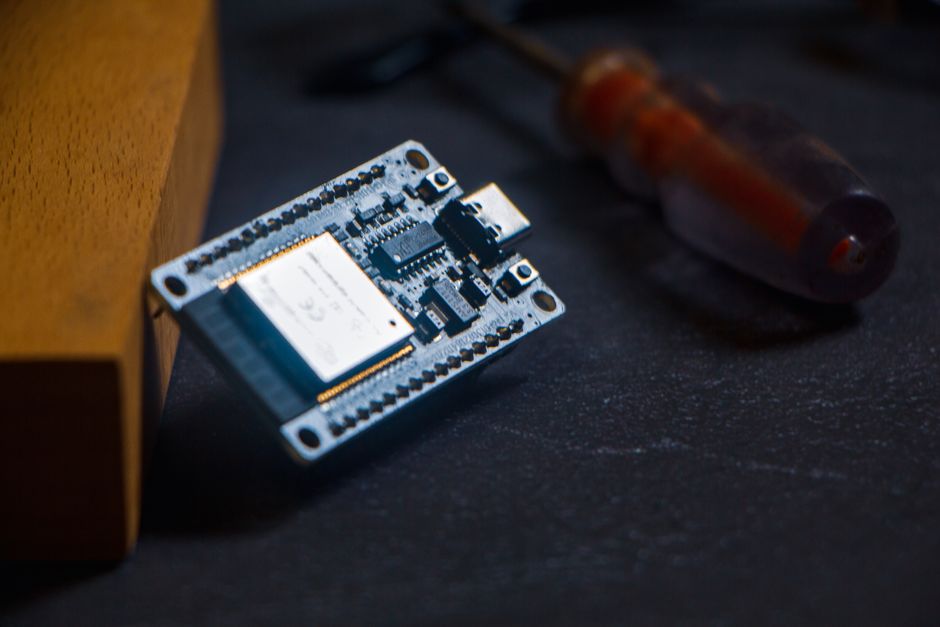
The $50 headline is a floor, not a quote, and the part that moves your actual total is the board itself. Round touch-LCD ESP32-S3 boards, the same class of hardware the preview used, decide most of the bill because what they bundle decides everything else: many ship with the LiPo charge circuit already on the PCB, and some include a microphone. First-time builders who order a generic parts list before reading their board's silkscreen end up double-buying the mic or the charge module, and duplicate hardware is the beginner tax. AI companion hardware at this scale stays refreshingly cheap regardless; a realistic ESP32 Claude Tamagotchi order lands near $50, which matches the reported total.
Typical street prices, give or take by distributor:
| Part | Role | Street price |
|---|---|---|
| ESP32-S3 round LCD touch board | Brain, face, touch input | $18 to $22 |
| INMP441 I2S MEMS microphone | Hears you, skip if onboard | $4 to $6 |
| MAX98357A amp plus 8 ohm speaker | Talks back | $5 to $8 |
| 1000mAh LiPo cell with JST harness | A day-plus of carry | $6 to $10 |
| Buttons, wire, printed shell or PLA | Finish | $5 to $12 |
That totals roughly $38 to $58 depending on choices, but read the spread as a commitment ladder rather than a menu. The stripped rung, a bare DevKitC clone with text over serial and no audio, comes in around $15 and is the right first build: it proves your toolchain and API plumbing for the price of lunch, with no face to keep alive. The standard rung is the table above, roughly $50 all-in, and it is the rung the viral builds sit on. The plush rung, printed shell, 2000mAh cell, and a real speaker, runs $75 to $85, and it only makes sense after a pet has survived a week of actual carry. You climb the ladder one purchase at a time instead of betting $85 on a first flash, and the verdict table at the end maps people onto these rungs. Whatever rung you pick, check which parts your board already bundles before the build vs buy AI companion math means anything, because the only wrong buy is the same part twice.
LLM API Cost per Interaction, Worked Examples
The heart of the build vs buy AI companion decision is recurring spend, because the build route's hardware is cheap and its tokens are forever. How much does an AI pet gadget cost to run? Three knobs decide it: exchange size, model tier, and how often you poke it.
The Math for One Exchange
A typical exchange sends a personality prompt plus rolling history plus your line, roughly 600 input tokens, and gets about 150 output tokens back. At illustrative small-model rates of $1 per million input and $5 per million output, in the ballpark of the fast tiers on Anthropic's current pricing and OpenAI's current pricing, that exchange costs (600 × $1 + 150 × $5) ÷ 1,000,000, or about $0.0014, a seventh of a cent. Aim the same pet at a frontier tier, illustratively $15 in and $75 out, and the exchange costs about two cents. Add a voice path with cloud speech-to-text and text-to-speech, and the per-minute audio charges can rival the token bill, which is why many builds start text-only.
Three Monthly Usage Scenarios
| Usage | Exchanges per day | Monthly exchanges | Fast small tier | Frontier tier |
|---|---|---|---|---|
| Light | 10 | 300 | ≈ $0.42 | ≈ $6 |
| Medium | 50 | 1,500 | ≈ $2.10 | ≈ $30 |
| Heavy | 200 | 6,000 | ≈ $8.40 | ≈ $120 |
A heavy user pointing a homemade pet at a frontier model can spend the hardware's price every month. The same pet on a fast small tier costs less per quarter than a coffee.
The monthly API bill is a dial you own: trim the rolling history, cap the tier, cache the greeting. The buy route's recurring costs depend on how Meta packages them at launch, so the honest comparison is DIY's transparent, tunable spend against whatever subscription eventually ships. Both routes pay for inference somewhere. Only one of them hands you the itemized bill.
Latency and Battery, the Pocket Constraints
ESP32 voice assistant latency and battery life are two views of the same duty cycle: how long the radio stays awake.
Where the Seconds Go
- Wake word, on-device via Espressif's wake word engine, detection typically inside a few hundred milliseconds and always local.
- Capture and uplink, around half a second on good Wi-Fi.
- Cloud speech-to-text, often 0.5 to 1.5 seconds.
- Model inference, first token in roughly 0.5 to 2 seconds depending on tier and prompt length.
- Text-to-speech and playback, another half second or more unless you stream it.
End-to-end voice round trips land around 2 to 5 seconds, and a button or text companion cuts that to roughly 1 to 3. The device's own compute is the cheap part of the budget; perceived responsiveness is dominated by network and model latency, so the builder's real leverage is streaming audio as it arrives, keeping the personality prompt short, and preferring fast tiers over clever ones. Nothing you flash onto the chip changes the speed of light between it and the datacenter.
Sizing a Battery for a Day of Carry
An ESP32-S3 board bursts into the low hundreds of milliamps with the radio active, while Espressif's deep sleep tests put the sleeping chip in the tens of microamps. Worked example with every assumption shown: a 1000mAh cell, 60 interactions a day, 30 seconds awake per interaction at about 180mA average, gives 60 × 30s × 180mA, roughly 90mAh per day, plus under 1mAh of sleep overhead, so about 11 days per charge. Run it always-on with the display lit and Wi-Fi maintained at about 120mA average and the same cell lasts about 8 hours. Duty cycle is the entire game, and deep sleep between pings is the difference between a weekend demo and an AI pet you can actually carry. Credit where due: the official device's custom battery engineering is the one place a $50 BOM genuinely cannot compete.
API Key Safety on a Five Dollar Chip
API key security on embedded devices is the failure mode nobody demos on video. The most common DIY disaster is a provider key baked into firmware, because a key inside a flash image is public the moment someone dumps the chip, clones your repo, or intercepts an update, and an extracted key means unlimited spend on your account until a cap catches it. The discipline in OWASP's secrets management cheat sheet applies to firmware as much as to web apps: clients hold revocable tokens, servers hold secrets.
The Proxy Pattern
The standard fix is one evening of work:
- The device carries a dumb device token, not a provider key.
- A tiny endpoint, a serverless function or a spare Raspberry Pi, holds the real key and maps tokens to requests.
- The proxy enforces per-device rate limits and strips anything you did not intend to send.
- Hard monthly spend caps in the provider dashboard catch whatever else goes wrong.
- Rotate on a schedule, so a lost or gifted pet costs you a token revocation, not a billing incident.
Do this before the pet leaves your desk, and it becomes the difference between a durable build and a late-night billing alert.
The Durable DIY Build Pattern
Week two is where builds break, in boring ways. Start from a working reference instead of a blank sketch, since projects like fumi on GitHub already solve the ESP32 companion plumbing, then harden the four spots that actually fail:
- Offline fallback. Wi-Fi drops, routers reboot, pockets leave range. The pet should degrade to canned lines and sad expressions, never a frozen screen.
- State persistence. Name, mood, and memory belong in NVS or littlefs so a reboot does not factory-reset the friendship.
- OTA updates. You will iterate on the personality weekly, and nobody reflashes over USB forever.
- Watchdog resets. A hung TLS call must reboot the toy within seconds, not brick it until someone finds a paperclip.
Add the duty-cycle discipline from the battery section and the build survives daily carry, which is the whole point of the form factor.
The Build vs Buy AI Companion Verdict
The build vs buy AI companion call splits cleanly by what you want the thing for:
| If you are | Pick | The honest reason |
|---|---|---|
| A tinkerer who wants control | Build | Interactions cost fractions of a cent, no subscription, every line is yours |
| Buying a gift for a normal human | Buy | Finish, battery life, and support with zero firmware maintenance |
| A heavy daily user | Build, capped | A fast small tier keeps the habit under $10 a month; uncapped on a frontier tier it can outspend the hardware |
| Privacy-first | Build behind a proxy | You pick the model, the region, and the log policy |
| Building with a kid | Build together | $50 of nearly unbrickable parts, and the lesson is the actual product |
Build if you will enjoy the maintenance as part of the charm; buy if the object must work for someone else tomorrow morning. Both routes converge on the same cloud bill and diverge on control, polish, and lock-in. The consumer device wraps a datacenter connection in soft plastic, and so does the $50 one. The charm was never in the silicon; it lives in the face you gave it.
Stay in the loop.
Get the latest posts and exclusive content delivered to your inbox.
Join 12 readers. No spam. Unsubscribe in one click, anytime.
About the author
Rachel Brennan
AI Research Editor
Rachel tracks AI research so the rest of us don't have to. With a background in NLP and a habit of reproducing papers, she turns new models and methods into ideas you can actually use.
Related Posts

SteerTTS Review, a Prosody Control Plane for Voice Agents
SteerTTS review: does z-score prosody control work as the control plane for LLM voice agents? Latency math, CPU feasibility, and a steerability harness.
Beam 501B Self-Hosting Cost, When Owning Beats Renting
We audit the real Beam 501B self-hosting cost, from GPU memory floors to fine-tuning and ops, and where owning weights beats renting a frontier API.
OpenAI Amp Review, the Builder's Verdict on a General Agent
This OpenAI Amp review maps GPT-6 Astra, Ultrafast, and GPT-Live-1 to agent duties, explains ChatGPT sign-in permissions, and gives an adopt-or-pass rubric.