Real-Time AI Dental Image Verification Cuts Claim Denials
AI dental image verification cuts claim denials across 10,000 practices. Learn the architecture behind 1.4-second point-of-capture quality scoring.

The highest-ROI AI in regulated healthcare catches a bad X-ray before the patient leaves the chair, not after the insurance claim bounces back days later. Henry Schein One's Image Verify system, now live across more than 10,000 dental practices, proves the pattern: embed a quality gate at the point of data capture and you eliminate a downstream rejection pipeline nobody was ever paid to fix. AI dental image verification is unglamorous, fast, and the engineering choices behind it transfer to any regulated operational setting where input quality drives adjudication outcomes.
Stay in the loop.
Get the latest posts and exclusive content delivered to your inbox.
Join 5 readers. No spam. Unsubscribe in one click, anytime.
Three threads run through this analysis. First, why the timing of feedback matters more than the accuracy of feedback. Second, how a quality-gate model's precision-recall math differs from a diagnostic model's math, with real regulatory consequences. Third, why the most reusable lesson in the whole deployment is an unglamorous CPU bottleneck, not a flashy model.
Where the Money Actually Sits in Dental AI
Diagnostics gets the press. Administrative friction owns the budget.
Up to 20 percent of dental insurance claims face initial denial, with missing or low-quality images ranking among the most addressable causes. That single figure reframes where AI should land in a dental practice. The American Dental Association publishes practitioner guidance on responding to claim rejections, and the recurring themes are documentation gaps, missing radiographs, and images that fail to meet clinical or adjudication standards. The ADA's broader practice resources document the same friction consistently.
Do the math on a mid-size practice. Submit 200 claims a week. A 20 percent denial rate produces roughly 40 rejections weekly. If even a quarter trace back to image quality, that is ten claims cycling through staff time, patient callbacks, re-shoots, and delayed reimbursement. The cost compounds because the bad image is already inside the adjudication pipeline by the time anyone notices. The clinical moment is gone. The patient is gone. The denial letter arrives days later.
AI dental image verification targets exactly this variable. Not diagnostic accuracy, not finding the cavity the clinician missed, but preventing the trivially wrong input from entering a system that was never designed to recover gracefully from it.
Why Point-of-Capture Verification Beats Batch Review

Batch post-hoc review sounds reasonable until you trace the cost path. A reviewer, human or model, scans the image queue hours or days after capture. By then the recovery cost has already compounded through several stages.
| Stage | What breaks | Rework cost |
|---|---|---|
| Capture | Nothing yet. Patient in chair, sensor in hand | Seconds. Retake immediately. |
| Submission | Claim enters the adjudication pipeline | Staff rework, possible denial |
| Adjudication | Insurer rejects for missing or inadequate image | Rejection letter, delayed reimbursement |
| Recall | Patient must return weeks later for a retake | Callback, no-show risk, write-off |
The staff member who captured the image has also lost the immediate learning loop. By the time feedback arrives, the technique that produced the bad image has been repeated across dozens of subsequent captures.
Point-of-capture verification breaks the compounding at every stage. The technician sees the quality score while the patient is still in the chair, retakes immediately if needed, and the corrected image enters the claim on the first submission. Analysis of dental insurance adjudication automation argues for early-stage intervention as the cheapest place to act.
The architectural insight: the cost of a bad input is not constant over time. It is roughly linear at capture, then jumps at submission, jumps again at adjudication, and spikes at patient recall. A quality gate at the earliest possible moment costs the least to operate and prevents the most expensive failure modes.
What Real-Time Means in a Dental Operatory
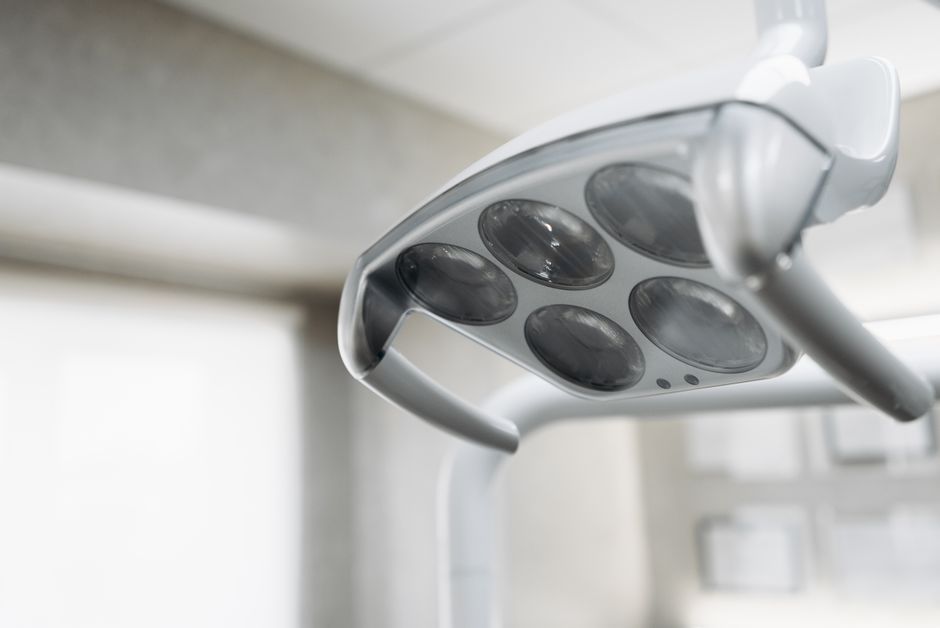
"Real-time" is a vague word until you stand in an operatory. Henry Schein One set the constraint at under three seconds end to end, from X-ray capture to a quality score on screen. Their production deployment reports a median of 1.4 seconds and a P90 of 2.2 seconds across millions of inferences.
Three seconds is not an arbitrary number. In practice, teams building point-of-care tools find that loading-spinner tolerance is thin, and the working assumption is that anything beyond a few seconds invites the clinician to route around the tool. Go shorter and you have budget for a more sophisticated model pipeline. The boundary is fuzzy, and Henry Schein One's internal SLA is consistent with the heuristic, though it is one company's operational target rather than proof of a universal threshold.
That budget constrains everything downstream. It rules out large ensemble models that need to run sequentially. It rules out cold-start serverless inference that pays a per-request initialization tax. It pushes the architecture toward warm, GPU-backed endpoints with autoscaling driven by request queue depth rather than CPU utilization. The SageMaker real-time endpoint documentation lays out the managed options, but the deployment decisions matter more than the service choice. Research on clinical inference latency requirements broadly supports the intuition that sub-three-second feedback is the threshold below which point-of-care tools survive clinical contact.
The integration constraint is just as tight as the latency constraint. If the verification step is a separate application the technician has to switch to, it will be ignored. Henry Schein One delivers the score through the Dentrix API integration surface and Dentrix Ascend, the practice management platforms clinicians already use. Building on an existing API surface rather than shipping a standalone app is what makes the quality gate visible at the moment of capture. The workflow rhythm matters as much as model accuracy. Clinicians will route around any tool that breaks their operatory cadence, no matter how clever the model underneath.
Quality-Gate vs. Diagnostic Model Design
The distinction between a quality gate and a diagnostic model is where positioning stops being marketing and starts shaping engineering and regulatory decisions.
A diagnostic model answers: what pathology is in this image? Its cost asymmetry punishes false negatives, because a missed finding has clinical consequences. Its regulatory profile is heavy, because the FDA treats software that informs clinical decisions as a medical device. The FDA AI device guidance defines the scope, and it is not a light compliance lift.
A quality-gate model answers a different question: is this image good enough to use? The cost asymmetry flips. A false accept lets a marginal image through, which downstream reviewers or adjudicators will catch. A false reject annoys the technician and erodes trust in the tool. The model optimizes for a precision-recall balance that favors not over-flagging, because the worst outcome is a clinician who stops believing the scores.
That flips the training data strategy too. Diagnostic models need labeled pathology across diverse populations. Quality-gate models need labeled image-quality judgments, which are cheaper to collect, less regulated, and more stable across imaging hardware generations. Clinical radiograph quality standards define what "good enough" means in practice, and the model learns to approximate that judgment. The medical image quality assessment literature surveys the deep learning methods, and the field is mature enough that a quality gate is a tractable engineering problem rather than a research bet.
The regulatory payoff is real. Because Image Verify does not identify pathology, it sits outside the Software-as-a-Medical-Device framework. That shortened the path from concept to 10,000 locations and let the team iterate weekly without change-control overhead. The cleanest claims launch announcement leans on "cleanest claims," not clinical insight, which is exactly the right positioning for a quality-gate product.
Architecture Choices for AI Dental Image Verification
The AWS case study details the full stack, and several decisions deserve extraction beyond the vendor narrative.
Multi-Model Sequential Pipeline
A classification stage identifies the image type (bitewing, panoramic, periapical), then specialized models assess sharpness, alignment, coverage, and completeness, and a final stage aggregates the results into a 1-to-5 score. Splitting the pipeline lets each model specialize, which is cheaper to train and easier to debug than a single monolithic model that tries to do everything at once.
Async Inference with Queue-Depth Autoscaling
The default autoscaling signal on most managed inference platforms is CPU utilization. On GPU-backed endpoints, that default is actively misleading. GPU inference pipelines carry substantial CPU-side work, including image decoding, format conversion, and tensor preparation. When that preprocessing saturates the CPU, the autoscaler sees high utilization and provisions new instances. But the GPU on the existing instances still has headroom, so the new hardware arrives, runs the same CPU-bound pipeline, and the queue keeps growing. You are paying for instances that do not solve the bottleneck.
Queue depth is the more honest signal because it measures pending demand directly. A growing queue means the system cannot keep up regardless of which resource is saturated. Scaling on queue depth lets the autoscaler respond to actual backlog rather than a proxy metric that points at the wrong resource. The cost implication is concrete: scaling on CPU utilization against a CPU-bottlenecked pipeline means buying GPUs you cannot feed.
The CPU Preprocessing Bottleneck
This is the most reusable lesson in the deployment. When the team profiled the pipeline, they found that image decoding, normalization, and resizing were running entirely on CPU while the GPU sat underutilized. The system was consuming more instances than necessary because a CPU-side bottleneck was masquerading as a GPU capacity problem. Moving preprocessing to the GPU, then migrating from ml.g6e.4xlarge to ml.g7e.4xlarge instances, dropped median latency from 1.687 to 1.432 seconds and let the fleet consolidate from 15 instances down to 10. That is a 33 percent infrastructure reduction with better response times.
The general principle: profile the full pipeline before scaling any component. Inference latency frequently hides in preprocessing, postprocessing, and data movement, not in the model forward pass. Adding instances to a CPU-bottlenecked GPU workload is expensive and ineffective.
Zero-Downtime A/B Deployments
Every model change is tested against a slice of real production traffic before it reaches all endpoints. This enables a daily deployment cadence across 10,000-plus locations with no scheduled maintenance windows. For a healthcare-adjacent system, that is a meaningful operational achievement.
Multi-Region via AWS Cloud WAN
Data residency requirements make in-region inference a compliance prerequisite, not a performance optimization. AWS Cloud WAN gives the team a single managed network fabric spanning four regions, which matters because consistent routing and bandwidth policies across regions reduce the variability that breaks distributed inference pipelines. The operational challenge is keeping all four regions synchronized during model rollouts. The zero-downtime A/B deployment pattern from the previous subsection is what makes that feasible: each region independently canaries a new model against live traffic before promoting it, so a global fleet of this scale ships updates daily without coordinated maintenance windows.
The fleet now runs at roughly 70 percent GPU utilization, having processed over 20 million radiographs with weekly volume now at roughly 1.5 million and still climbing. The deployment is designed to scale toward a global footprint of approximately 40,000 locations, with the current coverage at about a quarter of that target.
Spotting the Same Pattern in Other Regulated Workflows
The pattern transfers only when three structural conditions co-occur: the input producer is physically present at capture, input quality is assessable in isolation without downstream context, and the downstream cost compounds non-linearly. The dental case satisfies all three. The technician is in the room, the image can be scored on its own merits, and the cost of a bad radiograph spikes once it enters adjudication.
Pharmacy prior authorization is the clearest analog. PA submissions fail most often for documentation gaps: missing clinical justification, incomplete patient history, or a drug regimen that does not match the payer's step-therapy criteria. Each rejection triggers a manual review cycle that consumes pharmacist time and delays the patient's treatment by days or weeks. A submission-time quality gate would check the request against the payer's documentation requirements before it leaves the pharmacy system, flagging missing fields and ambiguous justifications at the cheapest intervention point. Research on point-of-care verification in healthcare supports the same early-intervention principle: catching a deficiency at the source costs orders of magnitude less than recovering from it downstream.
Clinical lab ordering is a second fit. A requisition with the wrong specimen type or missing clinical indication generates a rejected sample, a redraw, and a delayed diagnosis. Flagging the mismatch at order entry, before the phlebotomist draws blood, prevents the failure at near-zero cost.
Insurance field photos are a third. An adjuster captures a blurry or poorly framed damage photo and leaves the site. A quality gate in the field app, scoring the image before the adjuster drives away, prevents the re-inspection cycle.
The pattern breaks when the conditions do not co-occur. Consider manufacturing batch testing, where a single sample is meaningless in isolation and defects only surface statistically across a production run. There is no producer present at capture to correct, and quality is an aggregate property, not a per-sample one. Batch review is the correct shape there, and a point-of-capture gate would add latency without preventing failure. The structural conditions, not the technology, determine where the pattern wins.
What This Case Study Does Not Prove
Honest limits matter.
This deployment does not prove that quality-gate models are easy. Image quality is subjective, hardware varies, and the line between a marginal image and an unusable one shifts with clinical context. The reported 0.01 percent error rate is impressive, but it is measured against a quality-judgment ground truth that is itself imperfect. Anyone building a similar system should expect to invest in continuous label quality and disagreement handling.
It does not prove that AWS SageMaker is the only or best path. The architecture decisions, not the vendor, carry the lesson. The same patterns (async inference, queue-depth scaling, pipeline profiling, zero-downtime A/B) apply on other managed inference platforms or on self-hosted Kubernetes with GPU node pools.
It does not prove that point-of-capture always beats batch. Where the producer cannot correct the input at capture, where the input is generated by an instrument that runs unattended, or where the quality problem only manifests in aggregate across many captures, batch review may still be the right shape. The pattern wins when the producer is present and correctable.
And it does not prove that quality gates evade all regulation. The boundary between "is this image usable" and "does this image suggest a finding" is blurrier than the marketing suggests. A system that quietly flags images as inadequate because they happen to correlate with a pathology the developer did not intend to detect has crossed into diagnostic territory. The regulatory profile depends on what the model actually does, not on what the product page says it does.
The transferable lesson is narrower and more honest. In regulated operational settings, the highest-ROI AI is often the model that prevents a trivially bad input from entering a system that was never designed to recover from it. Henry Schein One built one. The architecture decisions are documented, the math is clear, and the pattern is waiting in your domain.
Stay in the loop.
Get the latest posts and exclusive content delivered to your inbox.
Join 5 readers. No spam. Unsubscribe in one click, anytime.
About the author
Rachel Brennan
AI Research Editor
Rachel tracks AI research so the rest of us don't have to. With a background in NLP and a habit of reproducing papers, she turns new models and methods into ideas you can actually use.
Related Posts

Devin GPT-6 Astra Self-Testing Moves Review to Evidence
Devin GPT-6 Astra self-testing shifts code review from reading diffs to auditing evidence. Here is the pattern, its failure modes, and audit criteria.

Netflix MAPS Teardown and What Actually Transfers
Netflix MAPS teardown: how multimodal asset personalization ranks artwork and previews per member, what results it drives, and which patterns transfer.

Meta's AI Second Brain Runs on a Knowledge Supply Chain
Meta's AI second brain shows why agents live or die on the knowledge supply chain, not the retrieval stack, and what small teams can copy first.