Natera SWARM Amazon Bedrock AgentCore Decoded
The Natera SWARM Amazon Bedrock AgentCore build, decoded as a reusable spec for running agentic AI diagnostics inside a regulated clinical lab.
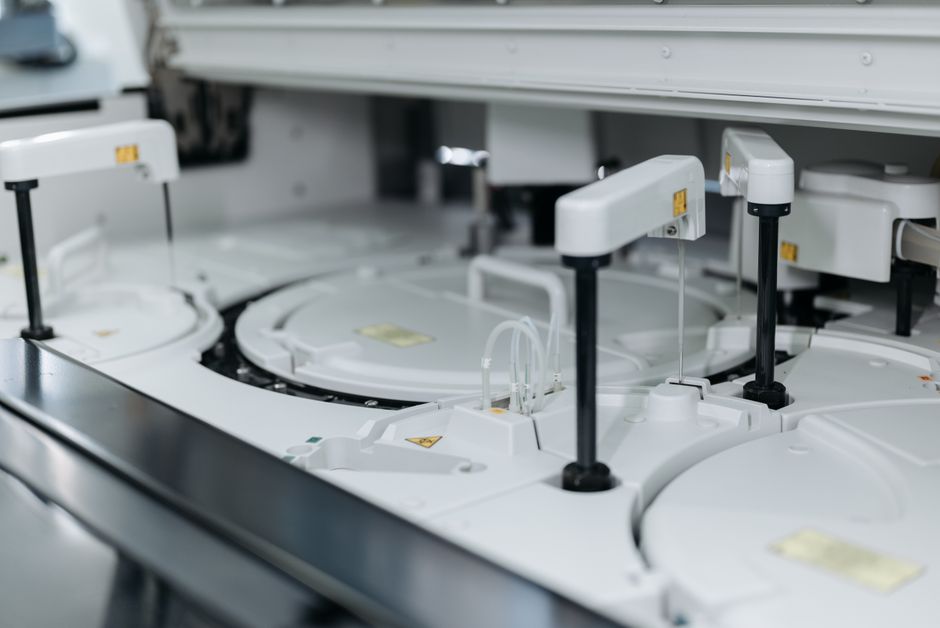
The Natera SWARM Amazon Bedrock AgentCore story will circulate as a partnership headline, and the engineering underneath deserves better. Read closely: SWARM is less a generative AI showcase than a control-systems retrofit, a multi-agent system pointed at the failure modes of physical lab instruments, with managed identity, durable execution, and an audit trail attached to every run. The part every vendor leads with, the model, is the most replaceable layer in the stack.
Stay in the loop.
Get the latest posts and exclusive content delivered to your inbox.
Join 13 readers. No spam. Unsubscribe in one click, anytime.
SWARM stands for Systematic Workflow Analytics and Resolutions Manager. Natera's service engineering team built it with AWS to keep instrument fleets running inside its cell-free DNA (cfDNA) testing operation. The AWS Machine Learning Blog post is the primary source for the figures that follow, and wherever this article goes beyond what AWS reported, the inference is flagged.
What AWS and Natera Actually Announced
Strip the launch language and the announcement describes a ticket-intake machine with unusual discipline. Per AWS, Natera's service desk fielded more than 65 tickets per day across three Jira queues, with an average first response time of 17.4 hours before SWARM and roughly 8 minutes after, which AWS frames as about 130x faster. Automated first responses covered 96.2 percent of incoming tickets over a 90-day production evaluation, measured from Jira metadata. The baseline evaluation set ran to 524 tickets, 269 of which had engineer-verified resolutions to grade against.
The architecture is two agents sharing one skill library. A background agent, swarm-agent, generates a structured diagnostic report before an engineer even opens a ticket. An interactive agent, swarm-hive, lets engineers probe alternatives, upload instrument photos, and keep conversational context across sessions. The library holds 33 skills, 24 instrument-specific and 9 cross-cutting.
What makes this worth an evaluator's attention is the target. Most agent systems shipping today watch software: code, documents, dashboards, support queues. SWARM watches a fleet of precision instruments whose failures propagate into clinical sample processing, which changes the failure modes, the compliance surface, and the economics all at once.
Why Instrument Downtime Is a Different Problem Class
A queued software job waits. A blood sample ages. cfDNA analysis starts with blood drawn from patients, and the pre-analytical window between draw and plasma separation is a live constraint: published cfDNA stability research shows that delayed processing can measurably degrade the analyte the assay depends on. An instrument that stalls mid-fleet does not merely slow throughput, it can push samples toward re-draws (a new patient appointment and blood draw) or delayed results.
Downstream, the clock keeps running. Natera's Signatera is a tumor-informed ctDNA test used in cancer surveillance, and its Signatera clinician resources sit at the end of this processing chain. Oncologists making surveillance decisions do not experience "delayed throughput." They experience a result that arrived after the clinic visit it was meant to inform.
That is why the 17.4-hour first response number mattered, and why hiring could not fix it. Senior technicians held instrument-family knowledge in their heads; when one departed, AWS notes, that expertise effectively departed too. The bottleneck was institutional memory at fleet scale, which is a retrieval and orchestration problem before it is a modeling problem.
How SWARM Turns a Ticket Into a Maintenance Action
One honest correction to the telemetry framing first, because it matters for transfer: as reported, SWARM's input stream is Jira tickets, not live instrument feeds. Tickets are telemetry of a kind, human-mediated and lagging, and the pipeline from ticket to recommended action is the part worth reverse-engineering. Whether your fleet can wire in direct alarms is one of the five questions later in this piece.
The pipeline as AWS describes it:
| Stage | What happens | Building block |
|---|---|---|
| Intake | A scheduler and polling function pull Jira tickets; verified tickets land in a queue | EventBridge, Lambda, SQS |
| Dedup and state | Ticket ID as partition key with TTL expiry; per-run status, cost, token usage | DynamoDB |
| Skill selection | Equipment family and symptoms route to one of 24 instrument skills or 9 workflow skills | Versioned skill library |
| Retrieval | RAG over vendor manuals and historical tickets, chunked at 1,000 tokens with 150 overlap | Bedrock Knowledge Bases, Titan embeddings |
| Diagnosis | Structured report with lead-cause hypothesis, ranked steps, confidence label, linked to the ticket | swarm-agent |
| Feedback | Engineers record the actual fix; responses graded Accurate, Partial, or Wrong by family | Evaluation loop |
Two design choices carry disproportionate weight. The deterministic split, where Python handles parsing and formatting while language models handle symptom interpretation and narrative, localizes failures. And the versioned skill library means a wrong diagnosis points to a specific skill rather than forcing a whole-system debug, which is also what makes the library auditable.
Where Humans Stay in the Loop
The quietest number in the AWS post is the most decision-relevant one: tickets the agent self-labeled High confidence reached 74 percent accuracy (154 cases), while Moderate and Low both sat at 65 percent (78 and 37 cases). Moderate and Low collapse to the same figure, which means the confidence label is currently a one-bit signal, High versus everything else. AWS itself flags the 37-case Low tier as too small to conclude much from. Treat that as the honest calibration state after a 90-day evaluation, and as the state any evaluator should assume at launch.
The label sits inside a boundary that is a contract, not a fallback. SWARM's autonomous action ends at diagnosis: produce the report, attach it, stop. It does not dispatch a technician. Anything touching clinical records or patient-impacting worklists terminates in a human decision by design, and the agent's job is to hand that human an evidence bundle (matched manuals, similar historical tickets, ranked causes, graded confidence) rather than a bare verdict.
The bundle is what the engineer actually reviews, so its quality is the product. Every grade the engineer returns (Accurate, Partial, or Wrong) feeds the by-family evaluation loop. That is how a one-bit label earns a second bit, and it is where Natera's own numbers show the remaining work: separate Moderate from Low, and grow the Low tier so the bottom label means something.
What AgentCore Actually Buys Over a DIY Harness
The honest question is what AgentCore adds over a thin custom harness of queues, containers, and a model API. AWS positioned AgentCore at launch as a managed service for building, deploying, securing, and operating agents at scale; the AgentCore launch post and the AgentCore FAQ are the authoritative component references.
| Concern | What AgentCore provided here | DIY harness equivalent |
|---|---|---|
| Runtime | Managed agent hosting with scaling and monitoring | Your own container orchestration, patched by you |
| Identity | OIDC-federated, short-lived credentials, keyless pipeline, IAM least privilege | Secret rotation you own, and usually get wrong |
| Observability | Per-invocation traces with time and cost per tool call | Instrumentation you build late |
| Memory and durability | Managed session memory, queue-backed reliable delivery | State stores and retry logic you write |
| Model choice | Swap models without rewriting agent logic | An abstraction layer you maintain |
Natera's stated reason matches the table: spend engineering effort on diagnostic accuracy rather than infrastructure plumbing. The trade is real, though. Durability, identity, and observability bought as managed services are bought at the price of portability and lock-in. A startup with low audit burden and one agent can rationally choose the thin harness and keep every option open. A regulated lab facing change control, HIPAA obligations, and an auditor requesting per-invocation traces cannot rationally build all of that itself, and that is the actual purchase decision.
What a Regulated Lab Adds to the Build
The constraints reshape the architecture more than any prompt does. Clinical laboratories in the US operate under CLIA, and CAP accreditation is the norm, which in practice means change control (nothing reaches production without a reviewable, versioned artifact), documented validation (evidence that it works, per component), and traceability (reconstruct who or what acted, when). The versioned 33-skill library is not a code-style preference; it is the unit of change control. A wrong diagnosis must resolve to a specific skill version, because that is what gets reviewed, fixed, and re-validated.
Data governance follows the same logic. SWARM runs on HIPAA-eligible services under a Business Associate Agreement, every agent invocation is audit-logged, and no patient-identifiable information reaches the vector index or the model; tickets carry equipment and workflow metadata only. The regulatory perimeter also moves: in 2025 a federal court vacated the FDA's laboratory developed test final rule, and the FDA's LDT pages track what remains in force. Almost none of this touches the prompting. All of it changes what you log, how you version skills, and what you may deploy without a validation cycle, which is why clinical lab automation is an architecture problem before it is an AI problem.
Failure Modes the Press Release Leaves Out
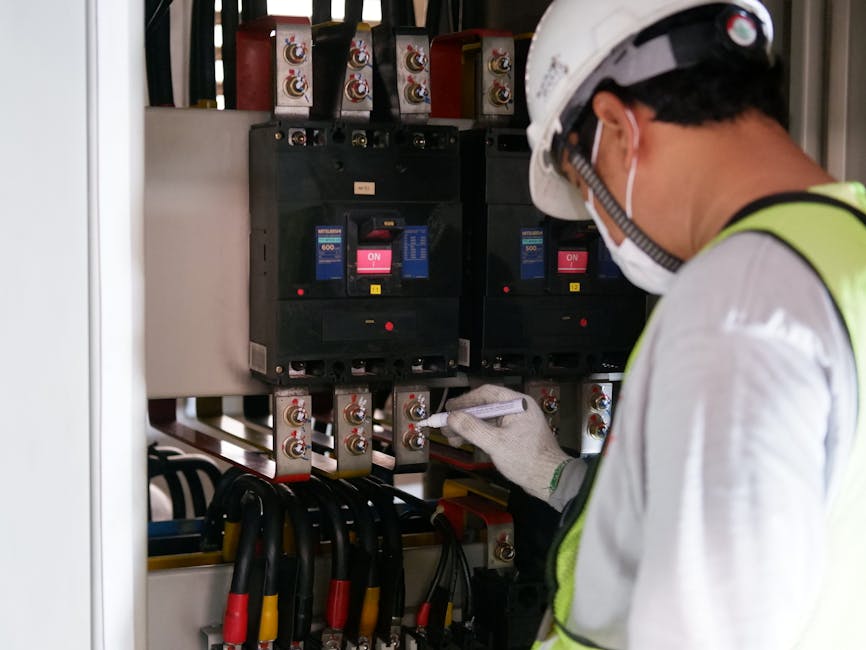
Four failure modes are specific to pointing agents at physical fleets, and the announcement does not dwell on any of them.
False-positive dispatch cost
The moment an agent may trigger maintenance actions, precision becomes an economic setting. A wrong autonomous dispatch burns technician hours, ships parts nobody needed, and takes an instrument offline for nothing. The action threshold should be derived from those cost components (technician time, parts, downtime per incident, alert volume), not from a model benchmark. The predictive maintenance literature treats false alarms as a first-class cost driver, not a footnote.
Data gaps that masquerade as model problems
Per AWS, backfilling the missing vendor manuals for the instrument family with the weakest scores lifted accuracy from 71 to 75 percent with zero model changes. When accuracy plateaus, check document coverage before touching the model.
Ambiguous vendor signals
Heterogeneous fleets mean the same symptom means different things across equipment families, and error codes are documented inconsistently. Retrieval quality dominates reasoning quality here.
Alert fatigue
96.2 percent automated coverage means reports arrive at nearly ticket volume. If engineers routinely find them wrong, they stop reading, and coverage quietly becomes noise. The continuous evaluation loop, grading every response by family, is the defense, and it only works if someone owns it.
Five Questions to Transfer the Pattern
AI agents for instrument fleet maintenance transfer to manufacturing, logistics, or facilities operations only when all five of these have real answers. A blank on any one is the finding.
- Telemetry inventory. What machine-readable failure signals exist (tickets, alarms, PLC codes, telematics)? SWARM worked because Jira tickets were already structured events.
- Action authority. What may the agent do alone: generate a report, open a work order, order a part, schedule downtime, dispatch a technician? Each grant multiplies both value and failure cost.
- Escalation contract. Which decisions terminate in a human, and does the agent hand over an evidence bundle with calibrated confidence?
- Durability needs. Do tasks span multiple steps and systems, and must they survive interruptions? If yes, durable execution earns its keep. Single-shot tasks make it overhead.
- Audit surface. Who inspects the logs, and what must each record contain to satisfy them?
Apply the rubric to two candidate operations. A packaging line largely passes: PLCs and CMMS work orders already emit structured events, maintenance technicians form a natural escalation tier, audit needs are moderate. A cold-chain fleet passes only partly. Telematics are rich, but a refrigeration unit failing at 2 a.m. has a response window measured in minutes, so without real dispatch authority the agent degrades into a pager, and dispatch authority is exactly what question 2 forces you to price.
A Minimal Build Spec You Can Copy
Strip the Natera SWARM Amazon Bedrock AgentCore deployment to a bill of materials and this is what remains:
- Event backbone: queue-based intake with deduplication (ID as key, TTL expiry) and per-run records of status, cost, and token usage.
- Versioned skill library with a defined interface per skill, and a hard split between deterministic Python and LLM reasoning.
- Retrieval over vendor documentation with chunk size and overlap treated as tunable parameters, plus custom parsing for tables and diagrams.
- Per-invocation tracing with time and cost per tool call, from day one.
- Self-rated confidence labels graded continuously against human-verified outcomes, broken out by equipment family.
- Keyless identity (OIDC federation, short-lived credentials) before the first production deployment.
- A named owner for the evaluation loop.
The pattern reaches beyond one lab; AWS's re:Invent 2025 recap shows similar agent architectures surfacing across healthcare and life sciences. The through-line to keep: SWARM's defensible value sits in durable multi-step execution, managed identity, and audit-grade observability, the parts Bedrock AgentCore standardizes, while the model layer stays the most swappable piece. Answer the five questions honestly, and you will know whether the pattern fits your fleet before anyone schedules a vendor call.
Stay in the loop.
Get the latest posts and exclusive content delivered to your inbox.
Join 13 readers. No spam. Unsubscribe in one click, anytime.
About the author
David Moreno
Applied AI Strategist
David helps teams put AI to work in real businesses. He writes teardowns of how companies actually deploy models: the architectures, the trade-offs, and the results that survive contact with the real world.
Related Posts
Airbnb's AI Customer Support Agents Decoded for Builders
Airbnb's AI customer support agents decoded into a build spec, covering multi-party conversations, moving-target evals, and the latency accuracy tradeoff.

Is a Consumer AI Agent Worth It? $550 Saved, $64 Wasted
Wired's consumer AI agent trial audited. $550 saved, $64 wasted, with per-task economics, failure modes, security risks, and the adopt-versus-build call.

Smartsheet MCP Server Teardown and Build Spec
Teardown of the Smartsheet MCP server on AWS: what tracker context adds to agent answers and how to permission the same pattern in your stack.