AI Coding Agents Cut Per-Task Cost Up to 4x With Indexing
Repo-aware AI coding agents cut per-task cost up to 4x by indexing repositories once, ending the cold-start tax that rebuilds context every session.
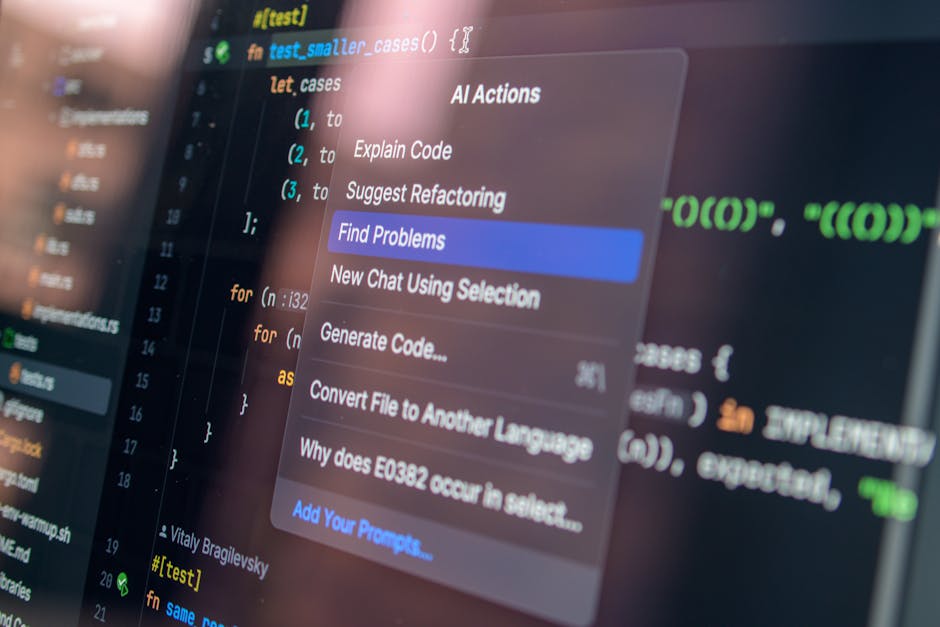
Same repository, same bug. One run costs $6.83. The other costs roughly $1.70. The fourfold gap between those numbers is architectural, and it is the single largest variable in what AI coding agents cost per task on real codebases.
Stay in the loop.
Get the latest posts and exclusive content delivered to your inbox.
Join 5 readers. No spam. Unsubscribe in one click, anytime.
The expensive run is a context-blind agent that starts cold on every session, re-exploring the repository from scratch and burning tokens on rediscovery before it writes a single line of code. The cheaper run is a repo-aware multi-agent coding harness that ingests the repository once, builds a persistent index, and reuses that structural knowledge on every subsequent task. When an engineer runs dozens or hundreds of coding sessions per week, that distinction stops being a tooling preference and becomes a budget decision.
The 4x Cost Gap Is Architectural, Not Model-Level
AutoDev Studio's own benchmark, documented in their repository, makes the gap concrete. For broader context on coding-agent performance across the field, the Artificial Analysis agent leaderboard tracks results across tools. On a localized bug fix in a real repository, a cold Claude Code run consumed $6.83 in tokens across 207 turns. The same task, handled by AutoDev Studio's repo-indexed pipeline, cost roughly $1.70. Both addressed the same task on the same repository. The benchmark does not specify which model each tool used, so part of the gap could reflect model differences. But the dominant mechanism is structural: the repo-indexed pipeline skipped the context-rediscovery work that the cold agent re-pays on every run.
That tax is what makes the gap structural rather than incidental. Swap in a cheaper model and both architectures get cheaper, but the ratio between them stays roughly the same because cold-start overhead scales with repository complexity, not with model pricing. Tighten the prompt and you trim marginal tokens, but you cannot prompt your way out of paying for repository rediscovery. The gap persists because the dominant cost driver is how the agent acquires context, not how it reasons once it has context.
What the Cold-Start Tax Costs AI Coding Agents

The cold run's 207 turns are enough to see where the tokens went, because turn count exposes the mechanism that makes cold-start cost compound.
Turn Count and Cumulative Cost
Every turn re-sends the agent's accumulated context as fresh input. Turn 1 sends the initial prompt. Turn 50 sends that prompt plus the outputs of the prior 49 turns. Turn 200 sends everything accumulated so far. Cumulative input-token cost grows roughly quadratically with turn count, because the agent pays to re-process its own prior context on every round-trip. Claude Code's cost documentation discusses session-level spending, which aligns with this pattern: context re-sending tends to dominate per-session cost rather than new token generation. This is why a cold run that needs 207 turns costs far more than one that needs 30, even when the per-turn work is similar.
Discovery Work in the Cold Run
On a well-localized bug fix, the actual code change is a small fraction of total effort. The rest is discovery work: enumerating files, reading directories, opening candidate source to understand module boundaries, and reconstructing call chains to verify the edit is safe. A context-blind agent performs all of this from scratch on every session, and it re-reads files that scrolled out of the context window turns ago. On the benchmark's most expensive task, the gap implies up to roughly 75% of the cold run's spend went to repository rediscovery. That figure is an inference, not a controlled measurement: the gap also reflects pipeline efficiency and possible model differences, not rediscovery alone. On simpler tasks where savings narrow to 7%, orchestration overhead offsets much of the gross indexing advantage. The repo-aware harness did not use a smarter model. It skipped the work the index already captured.
Converting Turn Count to Token Spend
The quadratic resend curve makes one wasted turn surprisingly expensive. If accumulated context reaches 50,000 tokens by mid-session, a single extra turn re-bills those tokens as input at Anthropic API pricing. At per-million rates in the single digits, one wasted turn near the end of a long session can cost more in resend than the initial prompt. On a cold run stretching to 207 turns, that cost compounds across every turn. The cold agent pays the penalty because it needs many turns to discover what an indexed agent finds in one structural query. A repo-indexed pipeline routes queries through a pre-built symbol graph, keeping turn count in the tens regardless of repository size. The broader tokenomics research compiled by practitioners documents how context acquisition, not generation, dominates token spend across coding-agent deployments.
How Repository Indexing Reduces Per-Task Cost
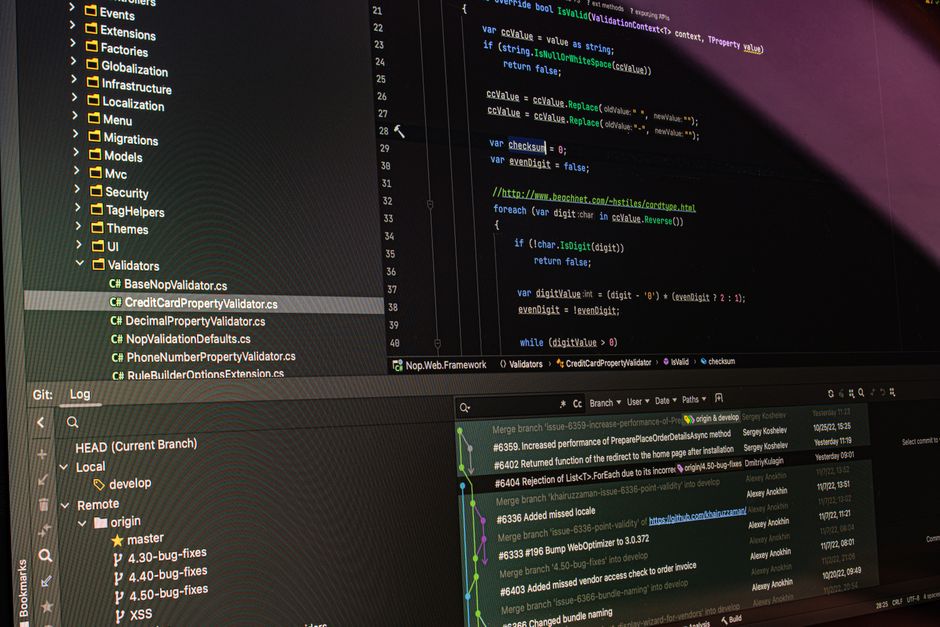
The cost curve of a cold agent is linear in the number of sessions: every task pays the full discovery price from scratch. A repo-aware harness inverts that economics. It pays the discovery cost once, structures the result into a persistent index, and queries that index on every subsequent task. From the second task onward, the agent pays only for the delta (what changed since the index was built), not for the full repository structure. This is why the gap between cold and indexed runs is architectural: the indexed architecture amortizes a fixed cost, while the cold architecture re-pays it every time.
Why Symbol Graphs Make Amortization Work Economically
The economics of amortization depend on compression. A full-text search index of a repository is large and semantically shallow. A symbol-graph index, which maps which functions exist, what calls what, and where module boundaries fall, compresses the same structural knowledge into a fraction of the tokens. That compression is what makes per-task reuse affordable: the agent queries a compact structural map instead of re-reading raw files.
Three independent tools have converged on this economics. Aider's repository map ranks symbols by structural centrality so the agent sees a compressed overview rather than raw file dumps. Cursor's codebase indexing builds a retrieval index that narrows the context window to relevant files. Tree-sitter's graph query tooling provides the parsing layer that makes symbol-graph extraction practical by defining queries over syntax trees. None of these teams set out to build the same thing, but all three are solving the same problem: how to compress repository structure into a token-efficient representation that an agent can reuse across tasks.
Research backs the structural-retrieval approach. Work on repository-level code retrieval explores how structured retrieval of relevant context can improve code generation efficiency. Empirical evaluations of graph-based code retrieval examine whether structural indexes outperform naive context windows.
Index Quality Determines the Amortization Slope
The non-obvious tradeoff is that index quality directly controls how much you save. A high-quality symbol graph lets the agent answer structural questions (where does this function get called, what depends on this module) by querying the index. A low-quality index still forces the agent to fall back to cold search, opening files and reading directories the way a context-blind agent does. Every cold-search fallback erodes the amortization advantage, because the agent re-pays discovery cost on that portion of the task. The savings curve flattens toward the cold baseline as index quality degrades.
The Multi-Agent Pipeline as a Context-Budget Strategy
AutoDev Studio compounds the indexing advantage by splitting work across specialized roles: a PM agent drafts the ticket, a Dev agent writes the fix, a QA agent runs tests, and a reviewer agent checks the diff. Each agent receives only the context its role requires, rather than one monolithic context window carrying the full discovery history. The Dev agent works with the structural index and the ticket scope. The reviewer receives the diff plus its immediate call-graph context. By distributing role-specific context windows, the pipeline avoids the quadratic context-resend cost that a single-agent architecture pays on every turn.
The cross-model review pattern adds quality without proportional cost. Splitting author and reviewer across different model families catches errors that a single model would rubber-stamp, because each model has different blind spots on the same diff. This does not double token spend because the reviewer processes only the diff and its context, not the full session history that a cold agent re-sends on every turn.
When Indexing Stops Paying Back
Indexing has an upfront cost, and payback depends on how often the index is reused versus how fast it goes stale. The indexing cost is recovered over subsequent tasks on the same codebase, with savings accruing on every task after that initial investment. On a codebase where engineers hit the same repository repeatedly across a week, the savings compound quickly. The break condition is freshness: every structural change invalidates part of the index, and when the codebase evolves faster than the index rebuilds, the amortized advantage disappears.
Benchmarked Across Real Repositories
The most informative number in AutoDev Studio's benchmark is not the headline 4x gap but the full savings range: across six tasks on repositories up to roughly 82,000 lines of code, the repo-indexed harness was 7% to 75% cheaper than a cold Claude Code run.
The 7% floor marks where pipeline overhead nearly cancels the indexing advantage. On a task small enough that the cold agent finds the relevant code within a few turns, the harness still pays for orchestration, role-specific context windows, and cross-model review. The 75% ceiling marks where the cold-start tax dominated total cost: a localized bug fix where the cold agent burned 207 turns, mostly on repository rediscovery before writing the fix. The break-even threshold sits between those two. Indexing starts paying the moment cold-start rediscovery would cost more than pipeline overhead, and the benchmark confirms that threshold is reachable on ordinary localized work, not just edge cases.
The methodology carries a structural bias worth naming. All six tasks were well-localized, the kind of real-issue evaluation that SWE-bench pioneered for testing agents against real GitHub issues with real test suites. Localized work is exactly where indexing wins, because the relevant code clusters in a few files. That structurally favors the indexing architecture and leaves cross-cutting work underrepresented. A fairer benchmark would test what this one omits: cross-cutting features spanning modules, large-repo cold starts where building the index is itself expensive, and multi-file refactors where locality breaks down. Until those are measured, the 4x figure is a starting signal on localized work, not a verdict.
Where Repo-Awareness Still Loses
The honest accounting matters more than the headline number, because the cases where repo-awareness loses are predictable and avoidable if you know them.
Greenfield Repositories
A repo with no prior structure gives the index nothing to work with. The harness still pays its pipeline overhead, but the indexing produces a sparse, low-value map. For greenfield work, a single-shot agent is often cheaper because there is no structural knowledge to amortize.
Full-Repo Refactors
When a task spans the entire codebase, locality breaks down. The repo-aware harness's advantage comes from narrowing the search space, but a full-repo refactor touches everything by definition. In AutoDev Studio's own testing, one complex cross-cutting bug produced a cheaper but narrower fix than the cold baseline. The harness optimized for locality and missed the broader scope of the change.
Rapidly Evolving Codebases
An index is only as good as its freshness. On a codebase where the structure changes faster than the index is rebuilt, the harness queries stale structural knowledge and either returns wrong results or falls back to cold search. The indexing overhead never pays back because the index is always out of date.
Tiny, One-Shot Edits
For small, obvious fixes, the pipeline overhead of a multi-agent harness exceeds the savings. A single-shot agent that reads the one file and makes the edit is cheaper because there is no cold-start tax to amortize. CodeRabbit exemplifies the same principle from the review-tooling side: repo-aware agents that invest in building repository context are designed to pay back on substantive diffs, not on trivial changes where the overhead adds no value.
The pattern across all four failure modes is consistent: repo-awareness wins when structural knowledge is stable, reusable, and localizable. It loses when those conditions break.
A Decision Rule for Picking an Architecture
The two architectures differ on four dimensions that decide which one fits your work.
| Dimension | Cold-start (Claude Code) | Repo-indexed multi-agent |
|---|---|---|
| Cost model | Re-pays discovery every session | Amortizes discovery once |
| Context strategy | Re-explores from scratch | Queries a persistent index |
| Best task shape | Greenfield, one-shot, or cross-cutting | Localized fixes on mature repos |
| Primary failure mode | Token waste from rediscovery | Stale index returns wrong context |
The multi-agent LLM coding framework literature surveys a range of architectures, but the practical question of how to reduce coding agent cost per task comes down to three tests.
- Sessions per week on the same repo: under 5, cold wins because indexing never amortizes; dozens, indexed wins. Fifty sessions at the $5 per-task gap from the headline case is about $250 per week per engineer, or roughly $13,000 annually.
- Repository maturity: stable structure with clear module boundaries favors indexing; active architectural churn invalidates the index faster than it pays back.
- Task locality: bug fixes in specific modules, scoped features, and test additions benefit from structural indexing; full-repo refactors, migrations, and greenfield scaffolding do not.
You do not need a custom multi-agent harness to start capturing this advantage. Cursor and Aider already ship repository indexing, so a single-agent workflow can claim much of the amortization benefit as a starting point. If your work matches high volume on stable, mature codebases with localizable tasks, Claude Code alternatives that index the repository are the cheaper architecture regardless of which model runs underneath. If it does not, the cold-start tax is the price of flexibility, and no amount of prompt engineering will remove it.
The cost gap between AI coding agents is architectural at its core. Understanding which architecture you are paying for is the difference between optimizing prompts and optimizing spend.
Stay in the loop.
Get the latest posts and exclusive content delivered to your inbox.
Join 5 readers. No spam. Unsubscribe in one click, anytime.
About the author
David Moreno
Applied AI Strategist
David helps teams put AI to work in real businesses. He writes teardowns of how companies actually deploy models: the architectures, the trade-offs, and the results that survive contact with the real world.
Related Posts

GPT-6 Astra Pricing at $6 an Hour, Audited
GPT-6 Astra pricing pitches an AI engineer under $6 an hour. We audit the real per-task costs, hidden token overhead, and what saturated benchmarks skip.

TontaubeV1 Review With Serving Math You Can Run
This TontaubeV1 review audits the 2.9B character-level TTS model with serving math builders can verify, covering VRAM, latency, and long-form narration.

oMLX Review, Auditing the 90s to 5s Agent Claim
This oMLX review audits the 90s to 5s agent latency claim, shows where wait time goes on Apple Silicon, and gives you a benchmark to run on your Mac.